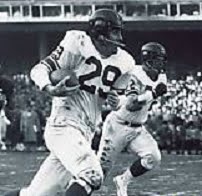
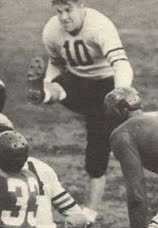
Showing posts with label Chicago Bears. Show all posts

Saturday, February 12, 2011

Past Venue: Wrigley Field

Chicago, IL


Year opened: 1914
Capacity: 46,000

Names:
Weeghman Park, 1914-20
Cubs Park, 1920-26
Wrigley Field, 1926 to date

Pro football tenants:
Chicago Tigers (APFA), 1920
Chicago Bears (APFA/NFL), 1921-70
Chicago Cardinals (NFL), 1931-37, 39

Postseason games hosted:
NFL Championship, Bears 23 Giants 21, Dec. 17, 1933
NFL Championship, Redskins 28 Bears 21, Dec. 12, 1937
NFL Western Division playoff, Bears 33 Packers 14, Dec. 14, 1941
NFL Championship, Bears 37 Giants 9, Dec. 21, 1941
NFL Championship, Bears 41 Redskins 21, Dec. 26, 1943
NFL Championship, Bears 14 Giants 10, Dec. 29, 1963

Other tenants of note:
Chicago Whales (MLB – Federal League), 1914-15
Chicago Cubs (MLB – NL), 1916 to date
Chicago Sting (NASL), 1977-82, 84

Notes: The Bears obtained a portable bleacher section that added approximately 9000 seats to the normal stadium capacity for football games. In addition to the dates noted above, the NFL Cardinals played two home games at Wrigley Field in 1920 and one in 1958. Hosted college football games up until 1938, and again between Northwestern and Illinois, Nov. 20, 2010, although the presence of extra box seats added by the Cubs after the Bears left brought the end line of the east end zone uncomfortably close to a wall, and thus all offensive plays had to be run in the same direction. Hosted NHL Winter Classic, Chicago Blackhawks vs. Detroit Red Wings, 2009.

The stadium was originally named for Charlie Weeghman, owner of the Chicago Whales of major league baseball’s short-lived Federal League. When that league folded, Weeghman, as part of a syndicate that included William Wrigley Jr., bought the NL’s Chicago Cubs, who moved into the new stadium. The Cubs have owned it since 1916. It is the last surviving Federal League ballpark.

Fate: Still in use.

Friday, December 31, 2010

1988: Bears Defeat Eagles in “Fog Bowl”


Pro football games have been played in all sorts of weather conditions, and when it comes to the NFL postseason that has typically meant frigid temperatures and/or snow. The NFC Divisional playoff game on December 31, 1988 was distinctive, however, for the ghostly fog that enveloped the field during the second half and that resulted in the contest being referred to as “the Fog Bowl”.

The host team, the Chicago Bears, had placed first in the NFC Central with a 12-4 record. Under Head Coach Mike Ditka, it was the fifth consecutive season that the club had won in double figures and included a championship in ’85. Defense had been the key to Chicago’s success, and while free agency and injuries had caused some damage, mainstays such as tackles Steve McMichael and Dan Hampton, LB Mike Singletary, and SS Dave Duerson were still around and the unit had allowed an NFL-low 215 points. Injury-prone QB Jim McMahon had gone down at midseason, but backup Mike Tomczak was competent in relief and third-year RB Neal Anderson generated 1106 yards on the ground.


The visiting Philadelphia Eagles, under third-year Head Coach Buddy Ryan (no stranger to the Bears, as he was the defensive coordinator during the Super Bowl season), had not been in the playoffs since 1981. They had won the NFC East with a 10-6 tally and featured a tough, blitz-heavy defense, led by DE Reggie White. The offense was directed by highly-mobile QB Randall Cunningham, who threw for a team-record 3808 yards and ran for 624. Rookie TE Keith Jackson (pictured at right) had an All-Pro season, catching 81 passes, and RB Keith Byars, a better receiver out of the backfield than runner from scrimmage, grabbed 72.

There was no clue at the game’s commencement of what lay ahead. The weather at Chicago’s Soldier Field was clear and temperatures were in the mid-30s at kickoff. The teams traded punts with the Bears scoring first, on their second possession. On a third-and-seven play, Tomczak connected with WR Dennis McKinnon for a 64-yard touchdown.

The Eagles came right back as Cunningham completed passes of 15 yards to WR Mike Quick and 17 to WR Cris Carter to the Chicago 33 yard line. But the drive stalled at the 25 and a 43-yard field goal attempt by Luis Zendejas missed to the left.

Philadelphia got a break, however, when Tomczak went to the air and was intercepted by LB Seth Joyner, giving the Eagles the ball at the Bears’ 30. Following a run by FB Anthony Toney, an 18-yard pass play from Cunningham to Jackson got the ball down to the 11. But after advancing to the nine, two successive apparent touchdown passes were wiped out by holding penalties on Toney. The Eagles ended up with a 43-yard Zendejas field goal.

Now it was Chicago’s turn to mount a drive, and thanks to two Tomczak completions to McKinnon of 14 and 22 yards, the Bears got to the Philadelphia 34. However, Kevin Butler’s 51-yard field goal attempt fell short. The score was 7-3 at the end of the opening period.

The Eagles got another break in the second quarter when Chicago TE Cap Boso fumbled after catching a pass from Tomczak and FS Wes Hopkins recovered for Philadelphia at the Bears’ 14. But on a third-and-seven play, Jackson dropped a pass in the end zone and the Eagles again had to settle for a 29-yard Zendejas field goal.

Chicago’s next possession resulted in a four-yard touchdown run by Anderson that extended their lead to 14-6. It was 17-6 shortly thereafter as Butler kicked a 46-yard field goal. The Eagles got the ball back with just under two minutes remaining in the half, and a 65-yard pass play from Cunningham to Jackson got the ball down to the Chicago five. Once again, a penalty backed the Eagles up and they were unable to get a touchdown in the red zone. Zendejas kicked a 30-yard field goal and the score was 17-9 at halftime.

The first hints of the fog blowing in off of Lake Michigan arrived late in the second quarter, and during the third quarter the field was completely enveloped. For most of the 65,534 fans and the press box-level television cameras, the field was no longer visible, completely cut off by the fog. Referee Jim Tunney chose to continue the game, which was televised from this point by sideline cameras. While accounts vary as to visibility on the field, Tunney said afterward that “I felt the conditions, while not great, were still playable. I could see all 22 players from my position. I occasionally lost sight of the safety, but only for a second or two.”

On the field, the Eagles took the second half kickoff and again drove deep into Chicago territory, but with the ball at the 11 yard line, Cunningham was intercepted by CB Vestee Jackson, who returned it 51 yards. This time it was the Bears coming up empty in scoring position as they drove to the Philadelphia 13 and Butler’s 33-yard field goal attempt was no good when it hit the right upright.

Later in the third quarter, Eagles SS Terry Hoage intercepted a Tomczak pass to give Philadelphia excellent field position at the Chicago 17. But after three incompletions, Zendejas kicked his fourth field goal of the game, from 35 yards. The Bears, with Jim McMahon replacing the injured Tomczak, drove to a 27-yard Butler field goal early in the fourth quarter.

The Eagles had two more possessions, but were unable to score again. The last series, that made it to the Chicago 16, resulted in an interception by CB Maurice Douglass that was returned 47 yards, and from there the Bears were able to run out the clock and win by a score of 20-12.

Philadelphia outgained the Bears (430 yards to 341) and had the edge in first downs, 22 to 14. Chicago turned the ball over more times (4 to 3), but untimely penalties and the inability to score touchdowns proved fatal – likely moreso than the weather conditions. The Eagles were inside the Chicago 26 yard line 10 times and came away with just four field goals.

Mike Tomczak completed 10 of 20 passes for 172 yards with a touchdown and three interceptions. Dennis McKinnon caught four passes for 108 yards and a TD. RB Thomas Sanders rushed for 94 yards on 8 carries, while Neal Anderson ran the ball 14 times for 54 yards and a score.


Randall Cunningham (pictured above) threw 54 passes and completed 27 of them for 407 yards, but was picked off three times. Keith Byars caught 9 of those throws for 103 yards while Keith Jackson gained 142 yards on 7 receptions and Mike Quick added another 82 yards on 5 catches. The Eagles had just 52 yards on the ground, with Byars gaining 34 of them on 7 attempts.

How much did the fog affect the outcome? Said Randall Cunningham afterward, “The fog really affected what we wanted to do. If you took your ten-yard dropback, you could only see about fifteen yards.”

Eagles owner Norman Braman, who left his seat in a luxury box for the sideline when it became impossible to see the action, said, “I was right there, and believe me, those officials wouldn’t have known if there were 22 players on the field or 16.”

But as Mike Ditka pointed out, “Half of the game was played in sunshine, and [the Eagles] couldn’t get the ball in the end zone. If they can’t score in the sunlight, that’s not our fault.”

Buddy Ryan added, “There was no reason for the game to be suspended. If this was a baseball game, maybe, but this is football, and you play the game no matter what the weather. The fog was on both sides of the line.”

Mike Quick said simply, “We beat ourselves.”

The Bears were handily defeated by the 49ers in the NFC Championship game. Philadelphia made it back to the playoffs in each of the next two seasons under Ryan, but failed to win any games. Many Eagles fans believed long afterward that the club’s best chance of making a Super Bowl run during this particular era disappeared in the fog at Soldier Field.

“I worked three Super Bowls, but I get more questions about the ‘Fog Bowl’ than any of the Super Bowls,” said Jim Tunney, the referee who kept the game going. “I still think we did the right thing.”

Thursday, December 30, 2010

1956: Giants Dominate Bears on Frozen Field for NFL Title


Temperatures in New York City were in the 20s and the field at Yankee Stadium was frozen for the NFL Championship game on December 30, 1956. The head coach of the host Giants, Jim Lee Howell, made the decision to have the players wear sneakers – reminiscent of the 1934 title game (although the sneakers were available prior to, rather than obtained during, the game). While in this instance the Bears did likewise, the result would be similar to the earlier contest.

The Giants had won the Eastern Conference with an 8-3-1 record. The offense, directed by assistant coach Vince Lombardi and led by 35-year-old QB Charlie Conerly, was conservative but effective and contained the consensus league MVP in HB Frank Gifford, who ran for 819 yards and added another 603 yards on 51 pass receptions. Defense was the team’s strength, however, coached by assistant Tom Landry and containing All-Pros in DT Roosevelt Grier, DE Andy Robustelli, and safety Emlen Tunnell. Rookie MLB Sam Huff had an impact, as did veteran newcomers HB Ed Hughes and DT Dick Modzelewski.

As had been the case in 1934, New York’s opponent was the Chicago Bears, leaders in the Western Conference at 9-2-1. George Halas still directed the club as owner, although he had retired as head coach (he came out of retirement in 1958) in favor of longtime assistant Paddy Driscoll. Chicago had the NFL’s leading rusher in FB Rick Casares (1126 yards) and the leading passer, QB Ed Brown (9.9 yards per attempt), who split time with George Blanda. All-Pro end Harlon Hill caught 47 passes for 1128 yards and 11 touchdowns. The defense, anchored by All-Pro middle guard Bill George, was rugged. The two teams had played to a 17-17 tie during the regular season and the Bears were favored coming into the title game.

The Giants were concluding their first season as tenants at Yankee Stadium, and there were 56,836 fans present. New York got off to a quick start as HB Gene Filipski returned the opening kickoff 53 yards to the Chicago 39 yard line. Four plays later, FB Mel Triplett ran 17 yards up the middle for a touchdown (pictured above). It didn’t get any better for the Bears when, on their first possession following the ensuing kickoff, Casares fumbled on the second play and Robustelli recovered for New York at the Chicago 15. Ben Agajanian ended up kicking a 17-yard field goal. Before the first quarter was over, Agajanian kicked for another three points, from 43 yards, after safety Jim Patton intercepted a Brown pass.


It was 13-0 after the first quarter as Conerly (pictured at right) entered the contest for the Giants. In an unorthodox arrangement, backup QB Don Heinrich typically started and ran the offense for the first couple of series while Conerly studied the defense’s tendencies from the sideline. With the veteran quarterback now directing the attack, New York’s lead was extended to 20-0 three minutes into the second quarter as HB Alex Webster ran three yards for a touchdown.

The Bears finally got a break when a punt was fumbled by Tunnell at the New York 25 and DT John Mellekas recovered for Chicago. A five-play drive was capped by Casares running nine yards for a TD. However, any hopes the Bears might have had of getting back into the game were dashed when the Giants responded by driving 72 yards in five plays, including a pass from Conerly to Webster that covered 50 yards and a 20-yard run by Triplett down to the Chicago two yard line. Webster finished off the possession with another short scoring run, this time from a yard out. Less than two minutes later, Giants guard Ray Beck blocked a punt by Brown that was recovered in the end zone for a TD by DB Henry Moore. The score was 34-7 at the half.

The second half added little of note. The New York defense continued to shut down the Bears, with either Brown or Blanda behind center, and Chicago even switched from the T-formation to the double-wing in an unsuccessful effort to generate offense. The Giants put together a third quarter scoring drive of 80 yards in four plays that ended with a Conerly pass to end Kyle Rote for a nine-yard touchdown (the extra point attempt failed).

New York scored once more, in the fourth quarter, as Conerly passed to Gifford for 14 yards. Backup Bobby Clatterbuck replaced the veteran quarterback at that point and the game ended with the Giants winning by a very convincing 47-7 margin.


The Giants outgained Chicago, 348 yards to 270, and held the Bears to just 67 yards on the ground. Charlie Conerly didn’t need to go to the air often, but was efficient when he did so, completing 7 of 10 passes for 195 yards with two touchdowns and no interceptions. Mel Triplett was the leading rusher, gaining 71 yards on 13 carries with a TD, while Frank Gifford (pictured at left) had 30 yards on five attempts and also caught four passes for 131 yards and a touchdown. Alex Webster (pictured below right), who had the two short scoring runs among his 12 carries for 27 yards, added another 5 pass receptions for 76 yards.


The Bears went to the air 47 times, with Ed Brown completing just 8 of 20 passes for 97 yards with an interception and George Blanda succeeding on 12 of 27 throws for 140 yards, also having one picked off. Rick Casares gained only 43 yards on 14 carries with Chicago’s lone score, but also had the costly early fumble. Harlon Hill caught 6 passes for 87 yards, but most came after the outcome had been decided. End Jim Dooley added another 6 receptions for 66 yards.

“The frozen field was no excuse,” said Paddy Driscoll afterward. “They just ran on it and we didn’t…we just didn’t have it…the Giants played a great game.”

It was the first NFL Championship for the Giants in 18 years. While the team would make it back to the title game five times in the next seven seasons, the win in 1956 would be their last until the Super Bowl following the 1986 season.

Wednesday, December 8, 2010

1940: Bears Demolish Redskins 73-0 for NFL Title


The NFL Championship game on December 8, 1940 remains the most one-sided in pro football history. It represents an astounding domination of one championship-caliber team by another. It also served as a demonstration of the capabilities of the revamped T-formation which, over the coming decade, would replace the single-wing as the offense of choice for most pro football teams.

There were 36,034 fans at Washington’s Griffith Stadium to see the Redskins, champions of the Eastern Division, take on the first place team in the Western Division, the Chicago Bears. The Redskins, under Head Coach Ray Flaherty, ran a double-wing offense and had the league’s best passer, tailback Sammy Baugh, to direct it. He had good receivers to throw to in ends Wayne Millner and Charley Malone, and FB Jimmy Johnson and HB Dick Todd were both effective receivers out of the backfield as well. In an era when defenses operated with three defensive backs, Washington typically sent four receivers down the field, and Baugh could usually find an open one.

Chicago, under the direction of George Halas, the owner and head coach, had been using variations of the T-formation for several years, but had recently refined it. He had an outstanding quarterback to operate it in Sid Luckman, a second-year ex-tailback out of Columbia. The club also had rookie HB George McAfee, who had quickly laid claim to being the best open-field runner in the league, Ray Nolting at the other halfback spot, and FB Bill Osmanski, as well as a stable of capable players who could spell them. The line was anchored by another rookie, center Clyde “Bulldog” Turner, and contained other eventual Hall of Famers in guard Danny Fortmann and tackle Joe Stydahar.

The two teams had met three weeks previously in Washington and the Redskins won by a score of 7-3. Also owning a better record (9-2 to Chicago’s 8-3), they were the favorites coming into the title contest. However, the motivational seeds had been sown after that earlier game when several of the Bears complained about a referee’s call that had nullified a potential game-winning touchdown. Washington’s imperious owner, George Preston Marshall, publicly referred to the Bears as “cry-babies” and “first-half ballplayers” – quotes that the Chicago players took careful note of.

Not only was there a motivational element to fuel the Bears, but Halas had been meeting with his offensive consultant, Stanford’s Head Coach Clark Shaughnessy, and several new plays were developed to attack the Redskins’ defense (primarily counter plays to take advantage of the tendency of the linebackers to shift toward the man-in-motion). The club was well-prepared and sky-high emotionally upon arrival in Washington.

It didn’t take long for the Bears to strike. On the second play of the game, Osmanski took a handoff, found a big hole at left tackle, cut to the sideline, and ran 68 yards for a touchdown (pictured at top). The last two Redskins with an opportunity to catch him were taken out in a single block by end George Wilson. Chicago was up by 7-0 less than a minute into the first quarter.

Washington came right back, however, getting a good kickoff return and then running the ball effectively. On a third down play, Baugh passed for the first time and had Malone open for what would have been an easy touchdown – he dropped it and the Redskins came up empty. Chicago responded by driving 80 yards in 17 plays. Only one was a pass, and it was to McAfee for 15 yards to the Washington two yard line. Shortly thereafter, Luckman scored on a quarterback sneak from less than a yard out.

The Bears got the ball back at the Redskins’ 42, and on the first play Luckman pitched out to FB Joe Maniaci, who went the distance. It was 21-0 after one quarter of play. Baugh was pulled out of the game and played little the rest of the way. The Bears scored just once in the second quarter, as Luckman connected with end Ken Kavanaugh for a 30-yard TD, and the quarterback was rested during the second half.

Chicago poored it on in the third quarter, adding another 26 points, three on interceptions that were returned for touchdowns (15 yards by end Hamp Pool, 34 yards by McAfee, and 24 by Turner). The offense also contributed a 23-yard scoring run by Nolting. Two of the extra point attempts failed, but it didn’t matter as the Bears were leading 54-0 with a quarter to go.

HB Harry Clarke made it 60-0 in the fourth quarter with a 44-yard touchdown run, followed by a failed extra point attempt, and as there was now a shortage of footballs due to PAT attempts sailing into the stands (there were just a dozen balls available for the game), for the remaining scores Halas told the team to run plays for the extra point attempts (under the rules of the time, they still counted for just one point). FB Gary Famiglietti ran for a two-yard TD, followed by a successful pass from QB Solly Sherman to Maniaci, and Clarke ended the scoring with a one-yard touchdown, after which the pass for the extra point fell incomplete. The lead was large enough, in any event, as the Bears became NFL Champions by a score of 73-0.

The domination was complete statistically, too. The Bears rolled up 519 total yards, to 231 for Washington. The Redskins gained just five net yards on 15 carries, to 381 on 53 attempts by Chicago, and also turned the ball over nine times (eight interceptions, one fumble). The Bears suffered just one turnover, on a fumble.

Bill Osmanski, who started it all, ran for 109 yards on 10 carries. Twelve Bears ran with the ball during the course of the game, with other notable contributors being Harry Clarke (73 yards on 8 carries and two TDs), Ray Nolting (68 yards on 13 attempts and a score), and Joe Maniaci (60 yards on 6 rushes and a TD).


As a whole, the Bears threw ten passes, and Sid Luckman (pictured at left with Halas) was good on three of four attempts for 88 yards and a touchdown. Maniaci was the leading receiver with three catches for 39 yards.

Sammy Baugh was successful on 10 of 17 passes for 102 yards with two intercepted. His capable backup, Frank Filchock, completed 7 of 23 throws for 87 yards and was picked off four times; he also led the Redskins with 20 yards on two carries. Wayne Millner caught 5 passes for 84 yards.

Afterward, Baugh was asked if the result might have been different if Malone had not dropped the sure scoring pass in the first quarter. The laconic Texan reportedly replied, “Yeah, it would have been 73-7.” He also called the game “the most humiliating thing I ever went through on the football field.” Such was Chicago’s total domination.

The Bears went on to repeat as champions in 1941 and, by 1943, had gone to four straight title games and won three of them. They aptly earned the nickname “Monsters of the Midway”. Washington fell short of a rematch in ’41 but won the Eastern Division in 1942 and upset Chicago for the championship to gain at least some measure of revenge for the trouncing in 1940.

Wednesday, December 1, 2010

1994: Vikings Prevail Over Bears with Moon-to-Carter TD in Overtime


The Minnesota Vikings had obtained 37-year-old QB Warren Moon (pictured at right) from the Houston Oilers after the 1993 season, with the hope that, having fallen short in the postseason in 1992 and ’93, the addition of the prolific passer would take them deeper into the playoffs. For sure, the addition of Moon, who had been operating in a pass-heavy run-and-shoot offense in Houston, changed the complexion of the offense and Head Coach Dennis Green’s team got off to a 7-2 start in ’94. But coming into the December 1 game against the Chicago Bears, the Vikings had lost three straight and were 7-5.

The Bears, under second-year Head Coach Dave Wannstedt, had won four consecutive games and were 8-4, putting them ahead of Minnesota in the NFC Central division. QB Erik Kramer had been brought in as a free agent to direct the offense, but struggled when he wasn’t injured. Fifth-year veteran Steve Walsh had been effective in his place – a career backup with a notoriously weak arm, he was also a smart game manager who could be effective in a conservative offense. Chicago was a team of no-names, but it was in the thick of the playoff race and had not lost with Walsh starting at quarterback.

There were 61,483 fans for the Thursday night game at the Metrodome. Things started off well for the Vikings when, on the game’s third play from scrimmage, CB Dewayne Washington intercepted a Walsh pass and returned it 54 yards for a touchdown. The Bears came right back, however, driving 67 yards in nine plays with Walsh throwing to RB Robert Green for a 39-yard TD to tie the score at 7-7.

The teams traded punts until midway through the second quarter when Fuad Reveiz kicked a 45-yard field goal that put the Vikings ahead again at 10-7. After LB Ashley Sheppard recovered a Walsh fumble with just under two minutes left in the half, Minnesota put more points on the board as Reveiz booted a 41-yard field goal on the last play of the half. It was 13-7 in favor of the Vikings at the intermission.

Minnesota went three-and-out in the first possession of the third quarter, and the ensuing punt was returned 60 yards for a touchdown by WR Jeff Graham. With the successful extra point, the Bears were in front for the first time at 14-13. The Vikings responded by driving 55 yards in 10 plays, and Reveiz kicked his third field goal, of 29 yards, to put Minnesota back in the lead at 16-14.

Chicago came back to score again. An 11-play, 64-yard drive that was highlighted by a 30-yard pass completion from Walsh to WR Greg McMurtry resulted in a 29-yard field goal by Kevin Butler and renewed lead of 17-16. That one-point margin expanded quickly when Minnesota WR Qadry Ismail fumbled the kickoff return and LB Barry Minter recovered for the Bears at the Vikings’ 33 yard line. Three plays later Walsh passed to McMurtry for a 15-yard touchdown and Chicago had a 24-16 lead after three quarters.

Early in the fourth quarter, Reveiz kicked a fourth field goal for the Vikings, from 38 yards, to narrow the score to 24-19. The teams traded punts, but a fumble by Bears RB Lewis Tillman gave Minnesota the ball at the Chicago 15 yard line. The Vikings capitalized when Moon tossed a one-yard touchdown pass to WR Cris Carter. Following a successful two-point conversion on a Moon pass to TE Andrew Jordan, Minnesota was back in front at 27-24.

Still, the Bears came back as WR Nate Lewis returned the ensuing kickoff 55 yards Butler tied the game just after the two-minute warning on a 33-yard field goal. Both teams had opportunities to win in regulation, but after trading punts, a long bomb by Moon was intercepted by CB Donnell Woolford at the Chicago three yard line.

The Bears won the toss in the overtime period and appeared set to win as they drove to the Minnesota 22 in nine plays. But Butler’s 40-yard field goal attempt was wide to the left, and two plays later Moon connected with Carter for a 65-yard touchdown that produced a 33-27 win for the Vikings.


Minnesota outgained the Bears, 385 yards to 312, and had 21 first downs to Chicago’s 15. Warren Moon completed 27 of 48 passes for 306 yards with two touchdowns and one interception. Cris Carter (pictured at left) caught 9 passes for 124 yards and two TDs. RB Terry Allen gained 74 yards rushing on 18 carries.

For the Bears, Steve Walsh was successful on 24 of 33 passes for 233 yards with two TDs and one picked off. Robert Green led the receivers with 6 catches for 69 yards and a touchdown out of the backfield, and ran the ball three times for 15 more yards. Lewis Tillman led the running attack with just 49 yards on 21 attempts.

Minnesota went on to place first in the NFC Central with a 10-6 record while the 9-7 Bears, along with Green Bay and Detroit, made it into the playoffs as a wild card team (officially, due to tiebreakers, they finished fourth in the division). Chicago had lost both of its games against the Vikings during the season, but avenged the losses in the Wild Card playoff by a score of 35-18. The Bears lost to the 49ers in the Divisional playoff game.

Warren Moon became the first 4000-yard passer in Vikings history, with an NFC-leading 4264. However, while he threw 18 touchdown passes, he also ranked second in the league with 19 interceptions.

Cris Carter set a new NFL record with 122 pass receptions and ranked seventh in the NFL in receiving yards with 1256. While he would duplicate the pass receiving total in ’95, Detroit’s Herman Moore broke the record with 123 catches.

Steve Walsh (pictured below) went 8-3 as the starting quarterback for the Bears, and while Moon outranked him in the passing rankings (79.9 to 77.9), Walsh had the lower interception percentage (2.3 to 3.2). However, he threw just 10 TD passes to his 8 interceptions and averaged a lowly 6.1 yards per attempt. He went back on the bench in ’95 and started a total of three games (all in 1996 with the Rams) in the remaining five years of his career.

Monday, November 29, 2010

1934: Bears Edge Lions in Thanksgiving Showdown


A Thanksgiving tradition began on November 29, 1934 when the Detroit Lions hosted the Chicago Bears at the University of Detroit’s Titan Stadium. The Lions, transplanted from Portsmouth, Ohio, where they played as the Spartans from 1930-33, were 10-1 entering the contest, having run off a record seven straight shutouts to start the season. They had lost to Green Bay for the first time the previous Sunday, by a score of 3-0, and had given up a total of 30 points in all.

Star tailback Dutch Clark had come out of a year’s retirement to lead a talented backfield for Head Coach George “Potsy” Clark’s club that included FB Ace Gutowsky, wingback Ernie Caddel, and tailback Glenn Presnell. End Buster Mitchell and guard Ox Emerson were All-Pro-calibre players.

The Bears were the defending NFL champions and came into the contest undefeated at 11-0. Under the direction of George Halas, the owner and head coach, Chicago typically dominated opponents and had only allowed two teams to score in double figures all season.

There was a sellout crowd of 25,000 fans in attendance for the Western Division showdown, and the game was broadcast nationally on radio (new Lions owner George Richards was a radio executive). Detroit got the first break of the day, with a defensive play that set up the first touchdown. With the Bears at their own 36, Mitchell intercepted a deflected pass by QB Carl Brumbaugh and returned it to the Chicago four yard line. Gutowsky ran for a touchdown from there and Clark drop-kicked the extra point.

The Bears tied the game thanks to HB Gene Ronzani scoring on a 14-yard pass into the end zone from QB Keith Molesworth early in the second quarter, with Jack Manders (pictured at top) adding the extra point on a placekick. The play was set up on a long completion by the same combination of Molesworth to Ronzani that put Chicago in scoring position.


The Lions regained the lead when Presnell kicked a 42-yard field goal. Gutowsky (pictured at left) powered over again for another touchdown shortly thereafter, capping a drive that began at the Detroit 35, but Clark’s extra point attempt was blocked. The Lions were up by 16-7 at the half. In the third quarter, Manders kicked field goals of 21 and 42 yards, cutting Detroit’s lead to 16-13.

The key play of the game occurred in the fourth quarter when G Joe Zeller intercepted a Gutowsky pass at his own 46 and returned it to the Detroit four yard line, where Gutowsky himself finally pulled him down. Two plunges into the line gained two yards, but then FB Bronko Nagurski, faking another run, instead reared up and floated a pass to end Bill Hewitt in the end zone for what proved to be the winning touchdown. Nagurski’s PAT attempt was blocked.

The Lions drove from their own 20 to the Chicago 14 yard line but gave up the ball on downs with less than a minute to play, clinching the 19-16 win for the Bears.

Detroit outrushed the Bears with 201 yards to 116 and led in first downs, 14 to 6, but Chicago’s passing attack and the kicking of Manders made the difference.

The win clinched the Western Division title for the Bears, and they emphasized the point by beating the Lions again in the season finale the following week in Chicago. Thus, they ended the season with a perfect 13-0 record, but were upset by the Giants in the NFL Championship game. Detroit finished second at 10-3.

Bill Hewitt’s game-winning touchdown reception was one of a league-leading five TD catches, out of a total of 11 receptions (Hewitt pictured below, #56 without helmet).

Jack Manders led the NFL with 10 field goals (by comparison, the five runners-up, which included Glenn Presnell and Dutch Clark, had four apiece), 28 extra points, and 76 points (Clark was the runner-up in both categories with 13 PATs and 73 points), showing why he earned the nickname “Automatic Jack”.

The Thanksgiving Day game was considered a success and, except for a brief hiatus during World War II, the Lions have continued to host a game every Thanksgiving.

Saturday, November 27, 2010

1955: Cardinals Hand Bears Key Defeat in Major Upset


The Chicago Bears were 6-3 and had won six straight games as they took on their cross-town rivals, the Chicago Cardinals, at Comiskey Park on November 27, 1955. George Halas, the owner and in his third stint as head coach, had announced that this would be his last season on the sideline and the club was focused on winning one last title for “the Papa Bear.” They were in first place in the Western Conference, a half game in front of the Rams, a club they had beaten twice.

The Cardinals were 3-5-1 and had lost their last two games coming into the annual intercity contest with the Bears. Under first-year Head Coach Ray Richards, the club had some outstanding talent in HB Ollie Matson (pictured above) and defensive halfback Dick “Night Train” Lane, but was by no means considered a match for its rival. They were 16.5-point underdogs coming into the game.

There were 47,314 fans in attendance in a heavy snowstorm, and even though it was the Cardinals’ home field, many of those were Bears fans, judging from the cheers for the Bears’ players during the pregame introductions. The turf was soft and muddy due to the weather conditions and the lights were turned on during the first quarter.

The tone for the game was set early as the Cardinals took the opening kickoff and drove 73 yards in 13 plays for the first score. QB Lamar McHan threw a pass intended for end Gern Nagler that was deflected but grabbed by end Don Stonesifer, who completed the play for a 28-yard touchdown.

The Bears took possession and were forced to punt. Matson received the kick at his own 23 yard line and returned it 77 yards for another Cardinals TD. Before the opening period was over, rookie HB Dave Mann scored on a 19-yard run to open up a 21-0 margin for the Cards.

The lead was extended to 27-0 in the second quarter after FB John Olszewski ran for a 41-yard touchdown. While PK Pat Summerall missed the extra point, it hardly mattered. The Bears finally got on the board when QB George Blanda ran for a one-yard TD, but were in a deep hole at 27-7 as the first half ended.

Any hopes that the Bears might climb out of that hole ended when they fumbled the ball away in their first two possessions of the second half. Summerall kicked field goals of 12 and 40 yards, and Mann contributed a long touchdown dash of 61 yards to add to the rout at 40-7 after three periods.

Matson and Stonesifer finished off the scoring in the fourth quarter, with the Hall of Fame halfback plunging in for a TD from a yard out and the end catching a seven-yard pass from McHan. The Bears scored an inconsequential touchdown in the last minutes as third string QB Bob Williams connected with end John Hoffman on a 23-yard pass play. The final score of the stunning upset was 53-14.


The Cardinals gained 301 yards on the ground, averaging 5.7 yards per attempt, and 175 passing for an overall total of 474, to 211 yards for the Bears. Dave Mann (pictured at left) led the club in rushing with 108 yards and two TDs. The Cards also led in first downs, 20 to 12, while the Bears turned the ball over five times (four interceptions, one fumble) to just two suffered by the Cardinals.

The Cardinals also led with 9 penalties, to four by the Bears. While tempers flared occasionally, a fight broke out near the end that caused two Bears and a Cardinal to be ejected.

The Bears, who were the top rushing team in the NFL, gained only 25 yards on the ground, with 186 through the air. QB Ed Brown, normally a reliable thrower, missed on all seven of his pass attempts. It was the worst beating the Cardinals had inflicted on the Bears since 1929, when Ernie Nevers scored six touchdowns.

“When you’re a Cardinal, part of the job is beating the Bears,” said veteran Charley Trippi, a Hall of Fame halfback in his prime who was finishing his career as a punter. “We beat them at their own game, with good blocking and good tackling.”

The loss proved devastating to the Bears’ postseason hopes – they dropped behind the Rams, and while they won their last two games to end up with an 8-4 record, LA did likewise to win the Western Conference title at 8-3-1. The Cardinals went 4-7-1 and tied the Eagles for fourth in the Eastern Conference.

Ollie Matson led the NFL in punt return average (18.8 yards on 13 returns) and, with the touchdown against the Bears, was the only player in the league to return two for scores during the season. His 1325 all-purpose yards (475 rushing, 237 receiving, 245 returning punts, 368 returning kickoffs) ranked second.

Dave Mann ran for 336 yards on 85 carries and caught 16 passes. He also ran back kickoffs as he totaled 609 all-purpose yards and handled much of the team’s punting (in addition to Trippi).

Don Stonesifer (pictured below) led the Cardinals in pass receiving with 28 catches for 330 yards and five touchdowns.

As for George Halas, while he did indeed step down as head coach (while continuing to run the club from the front office), it did not prove to be a permanent retirement. He returned to the sideline in 1958 and won another championship in ’63 before finally retiring for good after the 1967 season.

Wednesday, November 17, 2010

1963: Bears Dominate Packers in Key Western Conference Showdown


The main headline in the Chicago Tribune on November 17, 1963 read “Nation Awaits Bears-Packers Today”, and there was no question that the contest at Chicago’s Wrigley Field between the host Bears and visiting Green Bay Packers was significant.

Head Coach Vince Lombardi’s Packers had won the Western Conference the previous three seasons and went on to win the NFL Championship in 1961 and ’62. Seasoned and solid on both offense and defense, they were 8-1 heading into the showdown at Wrigley Field, having lost the opening game to the Bears in Green Bay by a 10-3 score. The offense, however, had sustained two key losses – one prior to the start of the season when star HB Paul Hornung was suspended by Commissioner Pete Rozelle for gambling, and the second in the sixth game when QB Bart Starr suffered a broken hand. 32-year-old veteran QB Zeke Bratkowski had been obtained from the Rams, but it was John Roach, in his third season as the backup, running the offense for the fourth straight game at Chicago.

The Bears, coached by the “Papa Bear”, 68-year-old George Halas, were also 8-1, having been upset by the 49ers in Week 6. The offense, led by QB Bill Wade, was conservative and unexciting, but the defense, coached by George Allen, was excellent against both the run and pass. The line was anchored by All-Pro DE Doug Atkins; the linebacking corps of Joe Fortunato, Bill George, and Larry Morris was considered the best in pro football; and the defensive backfield featured All-Pro safeties Roosevelt Taylor and Richie Petitbon (Morris pictured above tackling Roach).

There was a capacity crowd of 49,166 in attendance on a pleasant day. The Halas game plan was to control the ball and smother Green Bay’s offense, and that is what happened. The tempo was set in the first quarter.

The Packers received the opening kickoff and gained a first down on two five-yard runs by FB Jim Taylor, but were shut down thereafter. Jerry Norton’s punt traveled only 27 yards, giving the Bears good field position at their 40 yard line. They drove to the Green Bay 22, with FB Joe Marconi starting off with a nine-yard run and TE Mike Ditka catching a 16-yard pass from Wade, and Roger LeClerc kicked a 29-yard field goal.

The next Green Bay possession resulted in a 38-yard punt which, combined with a 15-yard penalty for a personal foul on OT Forrest Gregg, put the Bears on the Green Bay 47. The resulting possession ended with a 46-yard field goal by LeClerc to extend the lead to 6-0.


Packers CB Herb Adderley returned the ensuing kickoff from three yards deep in his end zone to the 35, but fumbled when hit by Chicago end Bo Farrington and LeClerc recovered. Wade passed to split end Angelo Coia for 14 yards and then fleet HB Willie Galimore (pictured at right) raced 27 yards for a touchdown. The score stood at 13-0 at the end of the first quarter, and for all intents and purposes the outcome was decided.

The Bears had another chance to score in the second quarter after Joe Fortunato recovered a fumble by Roach at the Green Bay 33, but LeClerc missed a 19-yard field goal attempt after Chicago drove to the 12.

In the first possession of the third quarter, the Bears went 68 yards, highlighted by a screen pass from Wade to Marconi that gained 28 yards to the Green Bay 43. The drive was finally stopped at the 12 and LeClerc kicked another field goal to extend the margin to 16-0.


The teams traded punts, and then Roosevelt Taylor (pictured at left) pulled a Roach pass out of the hands of flanker Boyd Dowler at the Green Bay 43 and returned it to the 35. However, the Packers defense stiffened and LeClerc missed another field goal attempt.

Bratkowski entered the game at quarterback for the Packers, but on the first play of the fourth quarter he was intercepted by CB Dave Whitsell, leading to a successful LeClerc field goal of 35 yards. With the clock running down to nine minutes, Bratkowski went to the air again but missed WR Bob Jeter twice on long passes, and the Bears took over on downs after four incompletions.

LeClerc missed a 49-yard field goal attempt, but after HB Tom Moore ran for 18 yards, Bratkowski was intercepted by CB Bennie McRae, who returned it 46 yards to the Green Bay 5. Wade faked a pass and then ran five yards for a touchdown on second down.

The Packers finally scored with just over four minutes left to play on an 11-yard run by Moore following a 64-yard pass play from Bratkowski to split end Max McGee, but other than salvaging some pride, it was meaningless (it was also the first touchdown the Packers had scored in two games against Chicago that season).

Following Green Bay’s touchdown, the Bears ran the clock down. Fittingly enough, the last play was Taylor intercepting a Bratkowski pass and Chicago came away with a convincing 26-7 win that put them alone in first place.


The Bears threw just 14 passes but ran the ball 57 times for an impressive 248 yards while holding the vaunted Packers running attack to 71. It was a great job of ball control to complement the domination by the defense, which constantly broke through to disrupt running plays, shutting down the famed Green Bay power sweep on several occasions before it could get under way. Perhaps most significantly, the Packers turned the ball over seven times while Chicago suffered no turnovers at all.

Bill Wade (pictured above right) directed the offense well and, in keeping with the game plan, didn’t throw often – he was good on 6 of 14 passes for 92 yards, and while he threw no touchdown passes, he also gave up no interceptions. He also ran the ball four times for 28 yards and a touchdown. Willie Galimore was the top rusher with 79 yards on 14 carries, including the one score. It was a group effort by the stable of running backs – Joe Marconi added 52 yards on 14 attempts, FB Rick Casares 44 yards on 11 rushes, and HB Ron Bull had 30 yards on four carries. Mike Ditka and Angelo Coia caught two passes apiece, with Ditka gaining the most yards (32 to Coia’s 26, while Marconi had 28 on his lone reception). Roger LeClerc (pictured below left) was another key to the club’s success, making good on four of seven field goal attempts.


Green Bay’s quarterbacks were a combined 11 for 30 and suffered five interceptions. John Roach was successful on 8 of 20 passes for 92 yards with two intercepted. Zeke Bratkowski was able to complete only 3 of 10 passes for 86 yards with three picked off (Bart Starr was active for the game but his only action was as holder on the lone placekick). Tom Moore was the leading rusher with 50 yards on 12 carries and a touchdown. Jim Taylor, after gaining the quick 10 yards to start the game, was held to only 13 yards the rest of the way and ended up with 23 on seven attempts. Thanks to the long reception late in the game, Max McGee was the leading receiver with three catches for 93 yards.

“They just beat the hell out of us, both ways, offensively and defensively,” said Coach Lombardi afterward.

Phil Handler, the Bears’ offensive line coach, was given the game ball in recognition of the inspired line play that allowed the Bears to run effectively and control the ball.

While the Bears tied their next two games, they didn’t suffer any losses the rest of the way and finished in first place with an 11-1-2 record. Green Bay also didn’t lose again, including one tie, to come in second at 11-2-1. The season series sweep by Chicago made all the difference – it was the first time since Lombardi’s first year in 1959 that a team had beaten the Packers twice in the same season. The Bears went on to defeat the New York Giants to win the NFL Championship – it was the sixth league title for Halas, who led the team to its first 42 years earlier.

The Bears finished at the top in total defense, including the rare distinction of being best against both the run and the pass. They allowed a league-low 144 points, intercepted an NFL-best 36 passes, and also were at the top with 57 sacks. The offense, by contrast, ranked 10th overall of the 14 NFL teams – but with only 25 turnovers (which, since the defense had 54 takeaways, gave Chicago a +29 differential), they minimized the mistakes and controlled the football enough to reach the top.

Wednesday, October 27, 2010

1991: Saints Lose for First Time as Bears Score on Final Drive


The Chicago Bears were 5-2 as they traveled to New Orleans to take on the undefeated (7-0) Saints on October 27, 1991 at the Louisiana Superdome. The Bears were in their tenth season under the direction of fiery Head Coach Mike Ditka and were used to contending – since Ditka’s third season in 1984, they had only once had a losing season (or for that matter, failed to win at least 10 games), and that had been two years before, in 1989 when they were 6-10. They had bounced back to 11-5 in ’90 and had every expectation of dominating the NFC Central.

New Orleans, long an NFL bottom feeder, had begun to win in 1987 under the direction of Head Coach Jim Mora. The Saints had twice been in the playoffs, although with a mediocre 8-8 record in 1990. QB Bobby Hebert had returned after sitting out the ’90 season due to a contract dispute, and whether he or Steve Walsh, the previous year’s starter, was behind center, the team kept winning thanks to an outstanding defense – they had not allowed an opposing team to score in double digits since the second week of the season.

Neither team was able to muster much offense in the first few possessions until, late in the first quarter, Hebert threw a pass down the middle to WR Floyd Turner for a 65-yard touchdown. The Bears managed two field goals by Kevin Butler in the second quarter, of 34 and 48 yards, but had difficulty sustaining any sort of drive. New Orleans took a 10-6 advantage at halftime when Morten Andersen boomed a 60-yard field goal on the final play of the period.

Chicago QB Jim Harbaugh (pictured above) managed to complete just two of his 10 passes in the first half. The Saints had been far better at throwing the ball, but had gained just 16 yards on 10 rushing attempts.

The Bears got a break in the third quarter when New Orleans CB Vince Buck was called for pass interference, resulting in a 37-yard gain to the Saints nine yard line. Two plays later, RB Brad Muster ran six yards for a touchdown and Chicago was in the lead at 13-10.

Two possessions later, the Saints put together a 56-yard drive in six plays highlighted by a 34-yard pass completion from Hebert to Turner. An eight-yard touchdown pass to Turner put New Orleans back in front, 17-13.

Early in the fourth quarter, Butler missed a field goal attempt from 51 yards out. The Bears came no closer to scoring as the game progressed and they continued to struggle on offense against the fierce pass rush. With just under two minutes to go, they took over on their own 48 after a poor 12-yard punt by Tommy Barnhardt of the Saints. Even with the good field position, it seemed as though the New Orleans defense was in control – Harbaugh had failed to complete a pass in the second half and was now a combined two of 19.

However, the passing game suddenly came alive as Harbaugh immediately completed a throw to WR Wendell Davis for 27 yards to the New Orleans 25. RB Neal Anderson ran up the middle for seven yards, and then caught a pass from Harbaugh for six more. Finally, Harbaugh threw to WR Tom Waddle for a 12-yard touchdown and, with the successful extra point, a three-point lead.

The Saints were unable to come back in the final seconds – a fourth-and-16 pass from their own 21 fell incomplete and the Bears, stymied on offense for so much of the game, won by a score of 20-17.


New Orleans easily outgained Chicago, 313 yards to 178, including a net 262 passing yards compared to 36 for the Bears. Jim Harbaugh ended up with 5 completions in 22 attempts for 61 yards with the game-winning TD and two interceptions. Brad Muster led the running game with 57 yards on 10 carries, while Neal Anderson was right behind at 53 yards on 12 attempts. Three receivers accounted for all of the Bears’ pass receiving – Anderson and Tom Waddle (pictured at left) each caught two passes for 17 yards apiece, and Wendell Davis was the yardage leader on his lone 27-yard reception.

For the Saints, Bobby Hebert was successful on 27 of 39 passes for 291 yards with two touchdowns against one interception. Floyd Turner had a big day, catching 9 of those passes for 179 yards and both TDs. However, the running game never caught fire, as the team ran for a total of 51 yards on 23 carries – RB Gill Fenerty was the leader with 25 yards on 8 attempts.

The win over New Orleans was the second of an eventual five straight for the Bears on the way to an 11-5 record and second place finish in the NFC Central - it was good enough to secure a wild card spot in the postseason, although they lost to Dallas in the first round. The Saints, after the strong start, faltered in the second half of the season. They won their next two games but then dropped four straight and finished at 11-5, still good enough to win the NFC West although they fell to arch-rival Atlanta in the Wild Card playoff.

Monday, September 27, 2010

1953: Bert Rechichar Leads Re-Formed Colts to Upset of Bears


Regular season pro football returned to Baltimore on September 27, 1953 when the re-formed Colts hosted the Chicago Bears in the season-opening contest at Memorial Stadium.

The earlier version of the Colts had replaced the Miami Seahawks in the All-America Football Conference’s second season in 1947 and had joined the Cleveland Browns and San Francisco 49ers in the NFL when the leagues merged in 1950. But after going 1-11 to finish with the league’s worst record, owner Abraham Watner sold the franchise back to the league.

Fans in Baltimore pushed to regain an NFL franchise, and after the Dallas Texans folded after one abysmal season in 1952, Commissioner Bert Bell announced that Baltimore could again have a franchise if they sold 15,000 season tickets in six weeks and suitable ownership could be found. The ticket drive reached the threshold in just a month and business executive Carroll Rosenbloom, who Bell had coached at the University of Pennsylvania, agreed to head up the new ownership group.

The new Colts started off with players from the Texans franchise that included DT Art Donovan, DE Gino Marchetti, and halfbacks Buddy Young and George Taliaferro. They also pulled off a 15-player trade with the Cleveland Browns in which they most notably obtained defensive backs Bert Rechichar, Don Shula, and Carl Taseff, and G Art Spinney.

The new Colts had different colors than the old (blue and white rather than green and silver) and the new head coach was Keith Molesworth.

There were 23,715 excited fans on hand for the opening game against the Bears, who were coming off of a subpar 5-7 record in ‘52. Chicago opened the scoring in the first quarter when HB Billy Stone, who had played with the previous edition of the Colts in 1950, ran for a 23-yard touchdown.

Bert Rechichar, the second-year defensive halfback obtained in the deal with the Browns, brought the crowd to its feet when he returned an interception 36 yards for a touchdown midway through the second quarter that tied the score.

With time running out in the first half, the Colts decided to try a long field goal attempt, but rather than use rookie Buck McPhail out of Oklahoma, who had handled all of the Colts placekicking during the preseason but had missed a 45-yard field goal attempt earlier in the contest, it was Rechichar lining up to attempt the kick from his own 44 yard line.

Many in the crowd were surprised to see Rechichar, who had never kicked a field goal as a pro. He made his first one memorable when he set a new league record by connecting from 56 yards out. The kick cleared the crossbar easily to break the previous mark of 54 yards by Detroit’s Glenn Presnell in 1934 and also gave the Colts a 10-7 lead going into halftime.

The game continued to be largely a defensive battle in the second half. In the third quarter, Colts QB Fred Enke was tackled in the end zone by DE Bob Hensley for a safety that narrowed Baltimore’s margin to 10-9. However, the regular placekicker McPhail added a 12-yard field goal in the fourth quarter and that provided the final score as the Colts won, 13-9.

The Bears outgained Baltimore with 334 total yards to 164, including the most passing (225 to 74) and rushing (109 to 90) yards, and had 20 first downs to 9 for the Colts. However, they gave up eight turnovers (four interceptions and four fumbles) and had come up empty on three possessions that took them inside Baltimore’s 20 yard line; they were stopped three times at the two yard line on one of them.

It was a good start for the re-formed Colts, who were 3-2 after five games (they beat the Bears again in Chicago, for good measure), but they lost the remaining seven contests to end up in fifth place in the Western Conference with a 3-9 tally. Just ahead of them were the Bears at 3-8-1.

Molesworth was moved to the scouting department in the offseason and replaced as head coach by Weeb Ewbank, a former assistant under Paul Brown in Cleveland. Baltimore’s fortunes would steadily improve thereafter.

Bert Rechichar (shown kicking at top) was successful on just 5 of 13 field goal attempts, although Buck McPhail hit on only two of five (he also handled all of the extra points and was good on 21 of 23 attempts). Far more proficient as a defensive halfback, Rechichar intercepted seven passes (All-Pro safety Tom Keane snagged 11). Over the course of his career, he kicked 31 field goals in 88 attempts for a 35.2 percent success rate and with a high of 10 in 1955 – when he led the league with 24 attempts. However, after being moved to safety he was named to three consecutive Pro Bowls and picked off a total of 31 passes (15 of them during that three-year period of 1955-57). His 56-yard field goal would remain the NFL record until bested by Tom Dempsey of New Orleans from 63 yards in 1970.

Wednesday, September 22, 2010

1940: Rookie George McAfee Keys Bears to Romp Over Packers


When HB George McAfee was chosen by the Philadelphia Eagles in the first round of the 1940 draft out of Duke, the Chicago Bears traded three players for his rights. It was a move that the Bears and their owner/Head Coach George Halas never regretted. In a single-platoon era when all-around skills were especially valued, McAfee could run, pass, and kick - but the running was his most significant asset.

The 6’0”, 177-pound halfback made an immediate impression in training camp and the preseason. He won an exhibition game against the Brooklyn Dodgers with a 73-yard punt return in the last minute. On September 22, 1940 he made an even bigger impression as the Bears opened their regular season against the arch-rival Packers at Green Bay’s City Stadium.

The Packers, under founder and Head Coach Curly Lambeau, had placed first in the Western Division in both 1938 and ’39 and were the defending NFL champions. They had opened their regular season the preceding week and defeated the Eagles 27-20. There was a then-record crowd of 23,557 on hand to see the Packers face the club most likely to threaten their perch atop the division.

Green Bay scored first, on a 25-yard field goal by Tiny Engebretsen. But on the ensuing kickoff, McAfee ran 93 yards for a touchdown – his first time touching the ball in a regular season contest.

The Packers would get a further taste of McAfee’s abilities as the game wore on. In the third quarter, with the Bears leading 21-10, he tossed an eight-yard touchdown pass to another noteworthy rookie, end Ken Kavanaugh. Then in the fourth quarter, McAfee scored his second touchdown of the contest on a nine-yard run.

Green Bay’s strong offense piled up plenty of yards, outgaining the Bears 333 to 290 and running off 19 first downs to Chicago’s 5. But the Packers also turned the ball over nine times and the Bears capitalized by making big plays. In addition to McAfee’s heroics, HB Ray Nolting returned the second half kickoff for a 97-yard touchdown and Kavanaugh scored a second TD to cap the scoring in the fourth quarter on a 39-yard pass play from QB Bob Snyder. Chicago was up by 21-3 in the third quarter before Green Bay managed to score again, on a 35-yard touchdown pass from tailback Arnie Herber to star end Don Hutson. But that was it for the Packers – the Bears won decisively, 41-10.

The pattern was established during McAfee’s rookie season of inserting him selectively during a game – Halas deployed him when his big-play abilities could be put to best use. He came to be referred to as “One-Play McAfee” both because he was typically limited to 30 minutes per game, and for his ability to turn a game on a very few touches of the football.

The Bears, with a deep and talented team and revamped T-formation, did indeed manage to place first in the Western Division, with an 8-3 record to Green Bay’s second place 6-4-1, and demolished Washington in the NFL Championship game by a 73-0 score. McAfee carried the ball 47 times for 253 yards (a team-leading 5.4-yard average gain) and two touchdowns, caught 7 passes for 117 yards (16.7 avg.) and threw two scoring passes. Kickoff and punt return statistics weren’t yet kept (that would begin the following year), but McAfee’s opening-game kickoff return for a touchdown was one of just three in the NFL that year. He also intercepted four passes on defense.

McAfee would have his greatest season in 1941, placing second in rushing (474 yards), rushing touchdowns (5, tied with three others), all-purpose yards (999), and points scored (72). He tied Green Bay’s Hutson for the most touchdowns with 12 and his six interceptions were right behind the two league leaders (the Cardinals’ Marshall Goldberg and Pittsburgh’s Art Jones with 7 apiece). Moreover, McAfee averaged 11.9 yards every time he touched the ball, over three yards more than league runner-up Jones (8.2).

After that, McAfee went into military service for three years during World War II, returning to play in three games in 1945 at age 27. He played until 1950, a total of eight seasons (in three of which he played three or fewer games), and his career numbers are hardly overwhelming. He gained a total of 1685 yards rushing, on 341 attempts for a 4.9 average with 21 touchdowns, and never had more than 92 carries in a season. In an era when backs typically weren’t a big part of the passing game (and teams didn’t pass as often in any case), McAfee had 85 catches for 1359 yards and a 16.0 average with 11 TDs. By far, his career high for pass receptions in a season was 32, for 492 yards and a score, in 1947.

McAfee returned 112 punts (aside from his rookie season), and his 12.8 average is still the career high for any NFL player with at least 75 returns. Two were returned for touchdowns. Used more sparingly to run back kickoffs, he had 18 for a 27.1 average and two TDs (again, the average doesn’t count his rookie season, prior to kick returns being compiled as an official statistic). McAfee also intercepted 25 passes on defense, twice picking off six in a season and with two returned for touchdowns.

Both left-handed and left-footed, as a passer McAfee tossed three touchdown passes in six career completions and as a punter averaged 36.7 yards on 39 punts, including a 79-yard boot in 1941.

The regard with which he was held by his own coach, “Papa Bear” George Halas, and other coaches around the league was unquestionably high. Green Bay’s Lambeau referred to McAfee as “the best and most dangerous man the Packers have ever faced.” Philadelphia’s Greasy Neale, who coached Hall of Fame halfback Steve Van Buren, called McAfee “the greatest plunging and quick-opening back I have ever seen.” Bears assistant Hunk Anderson said, “I played with (Notre Dame’s George) Gipp and I saw plenty of (Red) Grange, but McAfee is better than either one of them.”

The numbers in any individual category might look insignificant, but they add up to a versatile player who could do everything well. McAfee was selected to the Pro Football Hall of Fame in 1966.

Sunday, August 22, 2010

1947: College All-Stars Shut Out Bears Before Record Crowd


The Chicago Bears had represented the NFL in the College All-Star Game five times, once as the league runner-up (the only time the pro team was not a defending NFL or, later, pre-merger AFL champion that had won the Super Bowl), and had a record of four wins and one tie with no losses. Most of the contests, sponsored by The Chicago Tribune on behalf of Chicago Charities, had been close and the pro teams enjoyed an edge of just seven wins against four losses and two ties. Just the year before, the All-Stars had shut out the Los Angeles Rams, 16-0.

On August 22, 1947 the Bears, coached by George Halas and champions of the NFL in ’46, took on an All-Star squad for the sixth time at Soldier Field. Notre Dame’s Frank Leahy coached the All-Stars, who were utilizing the T-formation for the first time. A record crowd of 105,840 was on hand to witness the home town Bears against a team that included QB George Ratterman of Notre Dame, HB Doc Blanchard of Army, Georgia HB Charlie Trippi, G Alex Agase from Illinois, and T Dick Barwegan of Purdue. And there was the small but very fast Buddy Young, halfback from Illinois, at 5’5” and 165 pounds (pictured).

Overall team speed proved to be the key to the game for the All-Stars. In addition to quick halfbacks like Young and Trippi, the line, while lighter than Chicago’s, had speed to make up for it.

The All-Stars got the jump on the NFL champions by scoring two touchdowns in the first quarter. In their first possession, they drove 82 yards on 11 plays, highlighted by a 31-yard run by Young and capped by a four-yard touchdown carry by Notre Dame HB Jim Mello. The Bears blocked the ensuing extra point attempt, but the All-Stars came right back on their next possession. This time it took only two plays to go 87 yards – Young gained 41 yards on a pass from Ratterman and then the Notre Dame quarterback threw 46 yards for the TD to end Jack Zilly. The PAT was good this time, and the Bears found themselves in a 13-0 hole that they would not be able to climb out of.

There was only one more score the rest of the game, a 21-yard field goal by UCLA’s Ernie Case in the third quarter that provided the final tally of 16-0. It could have been even more lopsided – twice the collegians recovered fumbles inside the Chicago 10 yard line but failed to put any points on the board.

The All-Stars outgained the Bears in total yards by 340 to 116, and rushing yardage by 189 to 35. Chicago never got closer to the opposing end zone than the 20 yard line and the offense was unable to sustain any sort of meaningful drive.

Buddy Young was the MVP for the All-Stars as he gained 165 yards from scrimmage and electrified the crowd with his open-field running ability. Having made a statement as to his ability to play against pro competition despite his small stature, he went on to have a successful pro career in the AAFC and NFL. George Ratterman, who also went on to play in both leagues professionally, performed capably as he completed 8 of 12 passes.

The win over the Bears was the last time that the College All-Stars won two games in a row (they had previously done so in 1937 and ’38) and the only time they recorded back-to-back shutouts. They would win only four more times in the remaining 28 games of the series.

Thursday, May 27, 2010

1968: George Halas Retires as Head Coach of Bears


By the spring of 1968, George Halas was a 73-year-old man with a bad hip that was hindering his mobility (it was a legacy of his brief major league baseball career with the Yankees back in 1919). Yet it was still something of a shock to pro football fans on May 27, 1968 when he announced that he was retiring as head coach of the Chicago Bears after a total of 40 years.

It is hard to do justice to the pro football career of “the Papa Bear” in just a few paragraphs. It has been said that Halas didn’t invent pro football, it just seemed that way. His involvement extended beyond a single franchise – he was a significant figure in the development of the entire NFL. Halas was present at the 1920 organizational meeting of what would become the National Football League, representing the Decatur Staleys. From that beginning, as a player, coach, and business manager, he became a part-owner of the team in 1921, when the Staley Starch Works decided to forego operating a company-sponsored football team, and moved the franchise to Chicago.

After a year as the Chicago Staleys (A.E. Staley provided Halas $5000 in startup money with the stipulation that the Staley name be kept for a year), Halas rechristened the team the Bears after working out a lease agreement to play at Wrigley Field, home of major league baseball’s Cubs. He retired as a player in 1929 and also gave up coaching, handing the reigns to Ralph Jones while working out business matters with co-owner Ed Sternaman. After buying out Sternaman, Halas returned to coaching the team in 1933 and left for a second time in 1942 to join the US Navy during World War II. Once discharged, he again took up coaching in 1946 and retired following the ’55 season. He came back one last time in 1958, after having effectively maintained control while longtime assistant Paddy Driscoll was head coach.

While Halas had the ultimate job security of owning the team, the fact was that he was an outstanding and innovative coach, leading the Bears to a title for the first time in 1921 and the last time over forty years later, in 1963. In all, he coached the team to six championships, with at least one in each of his stints (1921, 1933, 1940, 1941, 1946, 1963). They also won championships under Jones (1932) and co-coaches Luke Johnsos and Hunk Anderson (1943), with Halas still a major presence in the running of the club.

Halas pioneered in the development of the T-formation with man-in-motion, assisted by Ralph Jones and University of Chicago coach Clark Shaughnessy. He was the first coach to hold daily practices and regularly analyze game film of opponents. He was an outstanding judge of talent, of coaches as well as players, surrounding himself at all times with able assistants (most notably Driscoll, Johnsos, Anderson, George Allen, and Jim Dooley) – and Halas also pioneered in the use of an assistant coach as an “eye-in-the-sky” during games. The results were reflected in a 318-148-31 record (.682) with a 6-3 postseason tally. The Bears had winning records in 34 of his 40 seasons on the sideline.

Off the field, Halas was a party to many rules changes and innovations that helped the league to gain appeal and improved the game (use of hashmarks, allowing passing from anywhere behind the line of scrimmage, structuring of the league into divisions with a championship game concluding the season, etc.). He also recognized the value of revenue sharing among the teams for the good of the overall competitive balance of the league and the significance of radio and television as tools for popularizing pro football.

As a coach, Halas was a strong disciplinarian and an emotional leader who was notorious for storming up and down the sideline while berating referees during the course of a game. He took criticism for being tight with money and complicit in the unofficial color line that kept African-American players out of the NFL during the 1930s and 40s. However, he also was the first coach to allow a black and white player to room together on the road (Gale Sayers and Brian Piccolo) and could be generous to players in need (during Piccolo’s ultimately losing battle with cancer, Halas reportedly paid all of his medical bills).

There were contradictions, but there could be no question that George Halas set high standards for later generations of coaches and showed farsightedness in moving the league forward. The influence of “the Papa Bear” is still felt decades after his death in 1983 – and some 90 years after he helped found the NFL.

Saturday, April 17, 2010

1999: Saints Trade All Picks to Draft Ricky Williams


The first round of the 1999 NFL draft was held on April 17, and it was eventful. Early speculation had been that RB Ricky Williams, who had won the Heisman Trophy at Texas while accumulating an NCAA Division I-A-record 6279 yards, would be the hottest commodity. But doubts began to arise as draft weekend approached - there were questions about the 6’0”, 225-pound power runner’s conditioning, attitude, dreadlocked appearance, and introverted nature.

In addition, the quarterback class was considered to be a strong one and the first three teams all went for that position. The newly-reconstituted Cleveland Browns, as an expansion team for the ’99 season, had the first pick and took Tim Couch, a 6’5”, 225-pound signal caller from Kentucky. The Philadelphia Eagles, coming off of a 3-13 season and with a new offense-minded head coach in Andy Reid, chose Donovan McNabb from Syracuse. Cincinnati completed the quarterback trifecta by taking Oregon’s Akili Smith.

Choosing fourth in the first round were the Indianapolis Colts, and having just drafted Peyton Manning the year before, their interest was in a running back (they had also just traded veteran Marshall Faulk to the Rams). However, they passed Williams over for Edgerrin James of Miami, who they felt was a better fit for their offense.

The fifth choice belonged to the Washington Redskins (picked up from Carolina thanks to a trade for DE Sean Gilbert the previous year). In a stunning move, the New Orleans Saints traded their entire draft allotment of six picks in 1999 plus their first and third round choices in 2000 to the Redskins in order to draft Williams. It was a controversial deal from the moment it was announced, and spurred debate for years afterward.

The Saints had gone 6-10 in ’98 and, moreover, had the league’s worst running attack. Mike Ditka, going into the third year of his head coaching comeback in New Orleans, viewed Williams as the centerpiece of his conservative offense and had made clear well in advance of the draft that he considered the Texas back worth the price of the club’s entire draft slate. GM Bill Kuharich went ahead with the deal, in spite the misgivings of some in the organization.

Ditka was ecstatic. The day after the draft, he appeared before a group of Saints fans in a Hawaiian shirt and dreadlock wig and shouted, “We are going to win the Super Bowl…We got Ricky, and he’s the final piece of the puzzle. I really believe that.” Ditka and Williams later appeared on the cover of ESPN magazine as a bride and groom, emphasizing the degree to which the coach had gambled his future on the prize running back.

Meanwhile, the Redskins turned around and dealt some of their draft bounty to the Chicago Bears in order to move up to the seventh spot in the first round and select CB Champ Bailey from Georgia. The Bears, trading down in the first round to stockpile picks, took QB Cade McNown of UCLA in the 12th slot (the original draft position of the Saints), just after another quarterback, Daunte Culpepper from Central Florida, was taken by Minnesota in the 11th spot.

Williams signed a comparatively cheap and insentive-laden contract (he made $3.8 million as a rookie, compared with James’ $14.8 million in Indianapolis) and proceeded to have a miserable season. He gained just 884 yards on 253 carries for a paltry 3.5-yard average with two touchdowns as a result of ankle, elbow, and toe injuries. He also alienated teammates and fans alike with his behavior and critical media quotes.

The Saints finished in last place in the NFC West with a 3-13 record, and owner Tom Benson fired Ditka and the rest of the coaching staff, as well as GM Kuharich.

The other teams involved in the deal didn’t fare all that well either. The Redskins ended up trading all but three of the draft picks away, and those three turned out to be LB Nate Stimson in the fourth round of the ’99 draft, LB LaVar Arrington in the first round in 2000, and DB Lloyd Harrison in the third round in 2000. Arrington had a solid career, but Stimson failed to catch on and Harrison bounced from Washington to the Chargers and Dolphins without distinguishing himself over a three-year career.

The deal with the Bears brought the opportunity to draft an outstanding performer in Bailey, but he and Arrington proved to be the only players of value from the dealmaking. The Redskins made the playoffs in 1999 with a 10-6 record, but were mediocre over the course of the ensuing five seasons. GM Charley Casserly was fired following the ’99 campaign, and Head Coach Norv Turner didn’t complete the 2000 season.

McNown was a huge disappointment for the Bears (as was the case with most of the highly-touted 1999 quarterback class), lasting just two mediocre seasons. The other players that Chicago drafted in ‘99 with the Saints picks that had come by way of Washington were WR D’Wayne Bates (third round) and LB Khari Samuel (fifth round). Bates caught a total of 15 passes over three years in Chicago before moving on to Minnesota (he caught 50 passes for 689 yards in 2002, but lasted just one more season). Samuel started one game for the Bears in 1999.

Mark Hatley, the director of player personnel, was fired in 2001 after Chicago, last place finishers in the NFC Central in 1997 and ’98, continued to land at the bottom of the standings in ’99 and 2000.

Washington traded two of the ’99 draft choices to Denver, and the Broncos used them on TE Desmond Clark (sixth round) and WR Billy Miller (seventh round). Ironically, Miller ended up being a reserve with the Saints.

Things did improve for Ricky Williams in New Orleans, where he had back-to-back thousand-yard seasons in 2000 and ’01. However, he never came close to meeting expectations and was dealt to Miami. He led the NFL with 1853 rushing yards in ’02, but drug and behavioral issues hampered his career thereafter.

The all-for-one deal of 1999 proved poisonous to the three teams most significantly involved. Almost all of the general managers and coaches who had been part of the trade and its related transactions were fired within two seasons. The Saints suffered most of all, in particular Ditka (pictured below), although he steadfastly defended the trade long afterward.