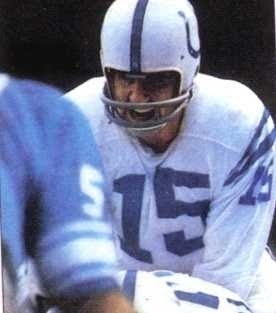
Showing posts with label Johnny Unitas. Show all posts

Monday, January 17, 2011

1971: Colts Beat Cowboys in Super Bowl V with FG in Last Seconds


It has been referred to as the “Blooper Bowl” for the sloppiness of much of the play, yet Super Bowl V was also a closely-fought contest that came down to the final seconds. It was the first to be played in the newly-restructured NFL and, unlike its four predecessors, was no longer a contest between champions of rival leagues – it now served as the NFL Championship game.

The American Football Conference (AFC) was the remnant of the American Football League that had merged into the NFL for the 1970 season, although its Super Bowl representative was one of three existing franchises from the older league that was moved into the AFC in order to provide two balanced 13-team conferences. The Baltimore Colts had gone 11-2-1 in 1970 to win the AFC East, and had beaten the Bengals in the Divisional round and Raiders for the conference title.

The Colts were an aging club with a new head coach in Don McCafferty, who had replaced Don Shula when he departed for Miami. 37-year-old QB Johnny Unitas still guided the offense, with occasional relief from 36-year-old backup Earl Morrall. The running game was mediocre due to injuries, while wide receivers Eddie Hinton and Roy Jefferson were primary targets for the passing game. The defense was solid, however, featuring DE Bubba Smith, MLB Mike Curtis, OLB Ted Hendricks, and safeties Rick Volk and Jerry Logan.


Representing the National Football Conference (NFC), the old NFL minus the three transferred clubs, were the Dallas Cowboys. Under Head Coach Tom Landry, the Cowboys were in the postseason for the fifth consecutive year and topped the NFC East at 10-4 before beating the Lions and 49ers to advance to the Super Bowl for the first time. QB Craig Morton (pictured at right) fended off a challenge from second-year backup Roger Staubach and the running game didn’t suffer when RB Calvin Hill was injured and replaced by rookie FB Duane Thomas. Like the Colts, defense was the key to the team’s success and included such stalwarts as DT Bob Lilly, DE George Andrie, MLB Lee Roy Jordan, OLB Chuck Howley, CB Mel Renfro, and safeties Cliff Harris and Charlie Waters.

The game was played at the Orange Bowl in Miami on January 17, 1971 with 80,055 fans in attendance on a pleasant day under clear skies. Dallas got the initial break of the game in the first quarter when Howley intercepted a Unitas pass. The Cowboys weren’t able to move the ball and had to punt, but got it back when Baltimore DB Ron Gardin fumbled the kick and Harris recovered at the Colts’ nine yard line. Dallas couldn’t score a touchdown, with Morton overthrowing WR Reggie Rucker in the end zone on third down, but Mike Clark kicked a 14-yard field goal to put the Cowboys ahead at 3-0.


Late in the opening period, the Cowboys commenced a drive that covered 57 yards in eight plays, featuring a 41-yard pass play from Morton to WR Bob Hayes, and, just into the second quarter, culminated in another Clark field goal, from 30 yards. The Colts responded quickly as, on the third play of the ensuing possession, Unitas fired a pass intended for Hinton that the wide receiver tipped and, after Renfro of the Cowboys also got a hand on it, TE John Mackey (pictured at left), who had been trailing the play, grabbed the ball at the Dallas 45 and ran unmolested the rest of the way for a 75-yard touchdown. The extra point attempt was blocked by DB Mark Washington, leaving the score tied at 6-6.

The Cowboys got another break halfway through the period when Unitas, forced to run out of the pocket, was hit hard by Jordan and fumbled; DT Jethro Pugh recovered for Dallas at the Baltimore 28. Three plays later, Morton connected with Thomas on a swing pass for a seven-yard touchdown.

Unitas left the game due to a rib injury and Morrall took over at quarterback for the Colts. Morrall started off well, completing two passes as Baltimore’s offense drove quickly down to the Dallas two yard line. However, three straight runs gained just a yard and on fourth-and-goal at the one, Coach McCafferty chose to go for the touchdown rather than attempt an easy field goal. Morrall’s pass intended for TE Tom Mitchell was incomplete and the Colts came away empty. The Cowboys led by 13-6 at halftime.

It looked as though Dallas might take decisive control of the game when the Colts fumbled away the second half kickoff at their own 21 yard line and the Cowboys proceeded to drive down to the one. But Thomas fumbled when hit by Baltimore’s Logan and CB Jim Duncan recovered for the Colts. Baltimore drove to the Dallas 44 in 11 plays, but Jim O’Brien was short on a 52-yard field goal attempt.

Baltimore failed to capitalize on a couple more opportunities as the second half progressed. Still in the third quarter, Morrall threw a pass to FB Tom Nowatzke that covered 45 yards to the Dallas 15 before the slow-footed back was pulled down from behind by CB Herb Adderley (pictured below). Following two running plays, Morrall threw into the end zone on third-and-six and was intercepted by Howley.


On their next possession, and now into the fourth quarter, the Colts tried a flea-flicker play, with Morrall pitching out to HB Sam Havrilak. However, due to Bob Lilly’s presence in the backfield near the quarterback, Havrilak didn’t toss it back and threw downfield. Eddie Hinton had broken into the clear and hauled in the pass at the Dallas 20 and appeared to be on his way to a score when he was hit hard by safety Cornell Green at the five and fumbled. The loose ball bounced through the end zone for a touchback despite the pursuit of several players.

Finally, three plays later it was Baltimore’s turn to benefit from a turnover. A pass from Morton intended for FB Walt Garrison was intercepted by Volk, who returned it 30 yards to the Dallas three. Two plays later, Nowatzke scored from two yards out, and with the successful PAT the score was tied at 13-13 with 7:35 remaining on the clock.

The teams traded punts, and with just inside of two minutes remaining, the Cowboys gained possession at the Baltimore 48. Thomas lost a yard on the first play and Morton was sacked by DT Fred Miller for a nine-yard loss on the second. To make matters worse, a holding penalty on the Cowboys took the ball all the way back to the Dallas 27 with the time down to 1:09. Morton threw a pass intended for HB Dan Reeves, but the ball bounced off the halfback’s hands as he was being hit by Logan and was intercepted by Curtis, who ran it back 13 yards to the Dallas 28.

The Colts ran two plays to the Dallas 25, running 50 seconds off the clock and setting up the field goal attempt. O’Brien, who had missed an extra point and a long field goal earlier, was successful from 32 yards (pictured at top) and the Colts came away as champions by a score of 16-13.

Baltimore outgained the Cowboys (329 yards to 217) and led in first downs (14 to 9). However, the numbers that drew the most attention were the 11 turnovers (7 by the Colts on four fumbles and three interceptions, 4 by Dallas on a fumble and three interceptions) and 14 penalties (10 called on the Cowboys, 4 on Baltimore).

Johnny Unitas completed just three of nine passes for 88 yards, with the TD on the deflected pass and two interceptions. Earl Morrall (pictured below), who gained some measure of vindication after having a poor performance in the Super Bowl III upset loss to the Jets, was successful on 7 of 15 throws for 147 yards with one picked off. Neither team was able to move the ball well on the ground, and of the 69 rushing yards for the Colts, Tom Nowatzke accounted for 33 on 10 carries with a TD while rookie RB Norm Bulaich, who had run well in the prior playoff games, carried 18 times for just 28 yards. Roy Jefferson caught three passes for 52 yards while John Mackey, with the long TD, gained a club-leading 80 yards on two receptions.


For the Cowboys, Craig Morton went to the air 26 times and completed 12 for 127 yards with a touchdown and three interceptions. Walt Garrison ran for 65 yards on 12 attempts while Duane Thomas was held to 35 yards on 18 carries. Dan Reeves led the team with 5 pass receptions for 46 yards out of the backfield - only one completion wasn’t to a running back, and that was the 41-yard reception by Hayes in the first half.

Among the contest’s oddities, Chuck Howley (pictured below) became the first member of a losing team to be named MVP of the game. “It’s nice, but I wish we had won the game,” he said.


“The big play was in the third period,” said Tom Landry. “That was when Duane Thomas fumbled on the Colt goal line. If he had scored, we would have had a 20-6 lead and the Colts would have had to do a lot of catching up. After that, it was nothing but errors for us.”

While John Mackey commented afterward, “We were lucky and I’d rather be lucky than good”, veteran OT Bob Vogel said, “So what if we were lucky? I’ve had luck decide against us so many times that I’m sick of it…The way I look at it, we’re getting the Super Bowl ring because we won the games that counted. We deserve it.”

For the Colts as a team, as well as Morrall personally, the win laid to rest the ghost of the Super Bowl upset two years before. It was also a last hurrah for many of the older players who had made the club an annual contender for several seasons, including Unitas, Morrall, Vogel, Mackey, Logan, and DT Billy Ray Smith. While Baltimore advanced to the AFC Championship game in ’71, most of those veterans were gone soon thereafter and the next time the franchise played in a Super Bowl, it was representing Indianapolis following the 2006 season.

The defeat added to the perception of the Cowboys as a team that came up short in big games, which was not eradicated until the next year when they dominated the Dolphins to win their first championship in Super Bowl VI.

Saturday, December 11, 2010

1960: Unitas’ 47-Game TD Pass Streak Comes to End as Colts Lose to Rams


The Baltimore Colts had won back-to-back NFL championships in 1958 and ’59, and seemed a good bet to win three straight when they got off to a 6-2 start in 1960. However, Head Coach Weeb Ewbank’s club sputtered at that point. Age and injuries began to catch up to the Colts, most significantly a torn Achilles tendon suffered by FB Alan Ameche that proved to be career-ending.

Of course, the Colts still had their star quarterback, Johnny Unitas (pictured above), who was playing with a bad back but was still effective. The running game was not nearly as productive without Ameche, though, and defenses were adjusting to concentrate on stopping the passing attack.

Baltimore had lost two straight games, including a stunning, last-minute 20-15 defeat at the hands of the Lions (one of the contenders chasing the Colts in the Western Conference) the previous week. They were now 6-4 and in trouble as they traveled to Los Angeles to take on the Rams on December 11.

Los Angeles had a new head coach in ’60, former star quarterback Bob Waterfield. The club lost its first four games (including one at Baltimore), but was 3-6-1 by the time the Colts arrived. Some younger players were getting opportunities to play, among them Frank Ryan at quarterback in place of veteran Bill Wade.

There were 75,461 fans at the Memorial Coliseum, and they saw a low-scoring defensive battle. The Colts looked impressive initially, taking up most of the first quarter with a 17-play, 80-yard drive that ended with a nine-yard field goal by Steve Myhra. But that was it as Baltimore held on to a miniscule 3-0 lead at halftime.

Ryan started at quarterback for the Rams but left with a shoulder injury, bringing Wade into the game. Del Shofner, normally a split end, saw action in the defensive backfield and was also the team’s punter until he went down with a leg injury. FB Joe Marconi took over the punting and had an excellent game, kicking six times for a 47.8 average and thus keeping the Colts from starting drives in good field position.

Wade made the biggest play of the game in the third quarter when he rolled out to his left and proceeded to run 66 yards for the only touchdown. He got a good block from Marconi and eluded CB Milt Davis at the 10 yard line on the way to putting the Rams ahead by 7-3.

Danny Villanueva added a 32-yard field goal for LA in the fourth quarter. In the closing minutes, Unitas moved the Colts from their own three yard line to the Rams’ 20, but a fumbled handoff to HB Alex Hawkins was recovered by Los Angeles DT George Strugar, nailing down the 10-3 win for the Rams.

While the Colts outgained LA by 272 yards to 248, they were held to 91 yards on the ground. They also fumbled five times, losing two of them. HB Lenny Moore gained 44 yards on 18 carries (by far his most attempts of the year) while the replacement for Alan Ameche, FB Billy Pricer, ran the ball 8 times and accumulated only 11 yards.

Stars on defense for the Rams included MLB Les Richter, DE Lou Michaels, DE Gene Brito, and DT John Baker. Michaels and the 35-year-old Brito were playing hurt, making their contributions all the more significant.

But the biggest story was that Johnny Unitas failed to complete a touchdown pass, breaking a string of 47 consecutive games stretching back to the eighth contest of the 1956 season (ironically, against the Rams at the same venue). As remarkable as the streak was at the time, it has grown in luster over the intervening years.

The streak occurred at a time when teams were not as prone to passing, and prior to rules changes (most notably in the 1970s) that opened up the aerial game and encouraged teams to throw the ball far more often. The closest any quarterback since has come to the 47-game streak is 36 by Green Bay’s Brett Favre from 2002-04. Dan Marino ranks third, with a 30-game streak in 1985-87.

Along the way, Unitas threw for multiple touchdowns in 33 of the 47 contests (including every game in 1959 and the six leading up to the contest against the Rams), with a high of four that he reached on seven occasions (three times in ’60). The Colts went 31-16 during the 47 games (Unitas missed two complete games to injury in 1958. The streak does not include the two NFL Championship games, in both of which Unitas threw TD passes).

The third straight defeat for the Colts effectively knocked them out of title contention and they ended up losing a fourth to close out the 1960 season with a record of 6-6, placing them fourth in the Western Conference. The Rams were farther behind in sixth place at 4-7-1.

While his touchdown passing streak ended and the team failed to remain on top in the NFL, the 27-year-old Unitas still was among league’s best passers. He set a new record for passing yards with 3099 (he in fact broke Sammy Baugh’s previous record of 2938 in the Rams game) and led the league in pass attempts (378), completions (190), and touchdowns (25). However, he also was second in interceptions thrown (24) due to defenses hanging back to stop the pass once they no longer feared the Colts’ running game (12 of the pickoffs occurred during the last four losing games of the year, including one by the Rams).

Monday, November 1, 2010

1959: Jim Brown’s 5 TDs Overcome 4 Unitas TD Passes as Browns Beat Colts


The November 1, 1959 game at Baltimore’s Memorial Stadium featured a showdown between the defending NFL champion Colts and their great quarterback, Johnny Unitas, and the Cleveland Browns with dominating FB Jim Brown. If anything, both players exceeded expectations.

The Browns, under the guidance of the highly innovative and successful Head Coach Paul Brown, were 3-2 coming into the contest. They had just missed winning the Eastern Conference in ’58, and a big part of their success was the 6’2”, 230-pound fullback from Syracuse. Jim Brown (pictured above) had exploded on the NFL in 1957, leading the league with 942 yards rushing and setting a new single-game record of 237 yards along the way. In 1958, he ran up 1527 yards, breaking Steve Van Buren’s single-season rushing record by 381 yards (he also broke the AAFC record of 1432 yards set by Spec Sanders in 1947).

The Colts, led by Head Coach Weeb Ewbank, had won the NFL championship in an epic contest over the Giants in ‘58 and were off to a 4-1 start as they sought to defend their title. Unitas was the centerpiece of a talented offense and had thrown touchdown passes in a record 30 consecutive games entering the contest against the Browns. Baltimore also had a solid defense that would be keying on Cleveland’s fullback – mammoth (6’6”, 284-pound) DT Gene “Big Daddy” Lipscomb commented that he had been “waiting a long time to get my hands on that Cleveland cat.”

There were 57,557 fans on hand as the teams matched field goals in the first quarter, Lou Groza connecting first for Cleveland from 16 yards and Steve Myhra booting a 23-yarder for the Colts. However, Jim Brown got things rolling for the Browns in the second quarter as he took a pitchout, ran off tackle, shook Colts safety Ray Brown off without breaking stride 30 yards downfield, and continued for a 70-yard touchdown.

The Colts came back to tie the score on a three-yard TD pass from Unitas to HB Lenny Moore, but Brown ran up the middle for a 17-yard touchdown to give Cleveland a 17-10 lead at the half.

Brown extended the Cleveland lead to 24-10 in the third quarter with a three-yard run, and also reached the end zone on a one-yard plunge after Unitas had responded with an eight-yard TD pass to flanker Jerry Richardson.

The Colts again closed the gap to seven points in the fourth quarter when end Raymond Berry scored on a 10-yard pass from Unitas to make it 31-24. But Brown plowed in from a yard out for his fifth touchdown of the game, and while Unitas threw a fourth TD pass of five yards to end Jim Mutscheller, it was the Browns winning the game by a 38-31 final score.

Baltimore gained the most yards (426 to 397) and had more first downs (28 to 22), but while the Colts defense was unable to contain Brown and Cleveland QB Milt Plum made clutch passes on third down to extend drives, the Browns defense shut down the Baltimore running game (45 yards on 19 carries) and stopped the Colts inside the ten yard line on four occasions.

Jim Brown ran for 178 yards on 32 carries, with all five touchdowns coming on the ground. Milt Plum completed 14 of 23 passes for 200 yards with no TDs, and while two were intercepted, 11 of the completions for 147 yards came on third down plays.


For the Colts, Johnny Unitas (pictured at left) went to the air 41 times and had 23 completions for 397 yards with four touchdowns against three interceptions. The loss negated outstanding performances by Raymond Berry, who caught 11 passes for 156 yards with a TD, and Lenny Moore, with 5 receptions for 115 yards and a score.

Weeb Ewbank sought out Brown after the game to shake his hand and say “Jimmy, you’re even greater than we heard you were. You played a wonderful game out there today.” A frustrated “Big Daddy” Lipscomb told reporters, “I’m still waiting to get my hands on that cat.”

In discussing his performance, Brown said, “Actually, the way I played today didn’t have anything to do with my ability. We had good play selection and most of the time I was going through gaping holes opened by our line.” Few, if any, in attendance would have agreed that Brown’s ability had nothing to do with it.

“Jim Brown was tremendous and Milt Plum did a really fine job,” summed up Paul Brown.

The loss dropped the Colts behind the San Francisco 49ers in the Western Conference, but, after losing the following week at Washington, they recovered to win five straight and closed out the regular season back atop the conference with a 9-3 record. They defeated the Giants once again for the NFL Championship. Cleveland won two more games before losing three straight (two of them by a single point) and finishing in a tie for second place in the Eastern Conference with Philadelphia at 7-5.

Jim Brown had 737 yards rushing following the big performance against Baltimore and led all NFL rushers once again in 1959 (as he would for eight of his nine seasons) with 1329 yards on 290 carries (4.6 avg.), including 14 touchdowns.

Johnny Unitas, with the four TD passes, had 17 for the year thus far and his consecutive game streak stood at 31, on the way to an eventual all-time record 47. For the ’59 season, he led the NFL in pass attempts (367), completions (193), yards (2899), touchdowns (32 – a record at the time), and percent of TD passes (8.7). He was named league MVP by The Sporting News and UPI, and received the Bert Bell Award from the Maxwell Club.

Friday, September 24, 2010

1972: Namath & Unitas Engage in Epic Passing Duel as Jets Beat Colts


By the 1972 season, QB Johnny Unitas of the Baltimore Colts was 39 years old and in the twilight of his great career. Joe Namath of the New York Jets (pictured above) was ten years younger but had missed most of the previous two seasons due to injuries. After winning the Super Bowl following the ’70 season, the Colts had gone 10-4 in 1971 to make the playoffs as a wild card team, but were now in a transition under a new owner, Bob Irsay, and vice president and general manager, Joe Thomas. New York had fallen under .500 in both 1970 and ’71 without Namath, following the ’68 season that had resulted in an AFL title and Super Bowl victory over the Colts and a division championship in ’69. Age and injuries had taken their toll on both the teams in general and starting quarterbacks in particular.

The Colts and Jets, division rivals since the 1970 NFL-AFL merger, met at Baltimore’s Memorial Stadium on September 24, 1972. New York had won its opening game the previous week at Buffalo handily, but more due to the running of second-year FB John Riggins (125 yards on 26 carries) than Namath’s passing (5 completions in 14 attempts for 113 yards with a TD and an interception). Baltimore, meanwhile, had lost dismally to the Cardinals – while Unitas passed for 257 yards, the Colts couldn’t get in the end zone and two passes were intercepted while PK Jim O’Brien misfired on three field goal attempts.

Expectations could not have been great for a high-scoring passing display, but that is what the 56,626 fans in attendance got. Namath set the tone in the first quarter by connecting with diminutive (5’10”, 160-pounds) WR Eddie Bell for a 65-yard touchdown. The extra point attempt was missed, and Unitas responded with a touchdown pass of his own that covered 40 yards to WR Sam Havrilak. O’Brien was successful on the PAT and the Colts held a 7-6 lead at the end of the first quarter.

Baltimore tacked on six more points in the second quarter as O’Brien booted field goals of 14 and 32 yards. The pace of the scoring sped up as the Jets responded with a 67-yard touchdown pass play from Namath to Riggins that was quickly followed by Baltimore’s RB Don McCauley returning the ensuing kickoff 93 yards for a TD. Namath struck again to knot the score at 20-20 with a 28-yard touchdown pass to WR Don Maynard. Broadway Joe’s fourth TD pass of the half, a mere 10-yard toss to TE Rich Caster, provided the Jets with a 27-20 lead at halftime.

The tide receded a bit in the third quarter, which was marked only by Bobby Howfield kicking a 14-yard field goal to put the Jets ahead by 10 points. But in the fourth quarter, McCauley ran in for a Colts TD from a yard out to make it a three-point game. Namath followed with a 79-yard touchdown pass to Caster. Unitas connected with HB Tom Matte for a 21-yard touchdown, but Namath iced the cake by again throwing to Caster, this time for an 80-yard TD that provided the final score of 44-34.

“I know it sounds dumb, but I’ve had better days throwing the ball,” said Namath afterward. While he completed just 15 of his 28 passes, they went for an astounding 496 yards with six touchdowns against one interception.

Rich Caster gained 204 yards on six catches with three touchdowns. Eddie Bell added another 197 yards on 7 receptions with a score. Don Maynard and John Riggins each caught one pass apiece, for touchdowns of 28 and 67 yards respectively; Riggins also was the leading rusher with 87 yards on 21 carries.


It all overshadowed an outstanding effort by Johnny Unitas (pictured at left), who completed 26 of 45 passes for 376 yards with two TDs and no interceptions. Tom Matte was the leading rusher, with 42 yards on nine carries, and also caught the most passes, with 9 for 69 yards and a TD. The converted halfback Sam Havrilak gained 115 yards on four receptions with a touchdown, and TE Tom Mitchell was right behind with 114 yards on 8 catches.

The game proved to be the last great performance for Unitas in Baltimore. While the Colts shut out Buffalo the next week, they proceeded to lose the next four games. After a 21-0 loss to the Cowboys in Week 5, GM Thomas fired Head Coach Don McCafferty, who had refused to bench Unitas – John Sandusky, the interim head coach, was ordered to do so and the nondescript Marty Domres started at quarterback ahead of the all-time great for the remainder of the year. It was the conclusion of an outstanding era for Unitas and the Colts. Baltimore ended up with a 5-9 record for third place in the AFC East.

The Jets finished second in the division with a 7-7 tally. Joe Namath stayed healthy enough to start all but one game and led the NFL in passing yards (2816), touchdown passes (19, tied with Washington’s Bill Kilmer), yards per attempt (8.7), and yards per completion (17.4).

Wednesday, September 15, 2010

1963: Tittle Leads Giants to Come-From-Behind Win Over Colts


The Baltimore Colts opened the 1963 season on September 15 against the New York Giants at Memorial Stadium in a state of transition under a new head coach. Weeb Ewbank, who had built the Colts into a championship team in 1958 and ’59, was fired after posting a 7-7 record in ’62 and replaced by 33-year-old Don Shula. Shula had been a defensive back for the Colts for four years, in between stints with the Cleveland Browns and Washington Redskins. He had moved into coaching upon his retirement as a player and, for the past three seasons, he had been the defensive coordinator in Detroit.

The Giants, under Head Coach Allie Sherman, had placed first in the Eastern Conference for the second consecutive year but had again failed to win the league championship as they fell both times to the Green Bay Packers. QB Y.A. Tittle had been outstanding since arriving through a trade with the 49ers prior to the 1961 season while the veteran defense was one of the NFL’s best. But just as age and injuries had caught up with the Colts, so the window of opportunity was beginning to close in New York.

It was a gray and rainy day in Baltimore, but the home fans had something to cheer about early on when the Giants fumbled on the third play of the game and star DE Gino Marchetti picked up the loose football and rumbled 40 yards for a touchdown. Two possessions later and still in the first quarter, New York fumbled the ball away again. This time QB Johnny Unitas, despite still suffering the effects of an injury to his throwing shoulder, threw a 34-yard TD pass to flanker Jimmy Orr (pictured below) for a 14-0 lead.


Don Chandler kicked a 42-yard field goal before the first quarter was over to narrow the margin to 14-3, but the Colts came back in the second period after yet another New York fumble, this by veteran HB Hugh McElhenny after a good run on a screen pass. Unitas connected with rookie TE John Mackey for a 32-yard touchdown and the Colts were up by 21-3.

The Giants began to climb out of the hole as Tittle threw to HB Phil King on a play-action pass that produced a 46-yard touchdown. When they scored again on a four-yard TD pass from Tittle to TE Joe Walton, the Baltimore margin was narrowed to 21-17. However, the Colts came back with a scoring drive that ended with FB Jerry Hill running for a three-yard touchdown. Just before the end of the half, McElhenny made up for the earlier fumble by catching a seven-yard TD pass from Tittle and the tally stood at 28-24 at the intermission.

The Giants took the lead in the third quarter with two key plays. Tittle passed to split end Del Shofner for a 43-yard gain to the Baltimore nine yard line and, when the Colts blitzed on first-and-goal, the 37-year-old quarterback ran for the touchdown (pictured at top). The extra point attempt failed, but New York was ahead by 30-28. The Giants scored one more TD in the third quarter, on a one-yard run by FB Alex Webster, and that provided the final margin of 37-28.


The three lost fumbles in the first half had nearly done the Giants in, but they outgained the Colts by 362 total yards to 295. Tittle completed 16 of 23 passes for 243 yards with three touchdowns and no interceptions and ran for 24 yards on five carries, including the game-winning TD. Phil King (pictured at right) and Del Shofner each caught five passes, with King gaining 101 yards and scoring the team’s first TD and Shofner gaining 85 and setting up the game-winning score. New York also ran effectively, gaining a total of 119 yards on 37 rushes, with Webster leading the way at 60 yards on 15 carries.

For Baltimore, Johnny Unitas completed 19 of 33 passes for 219 yards with two TDs and two interceptions. Jimmy Orr was the leading receiver with five catches for 83 yards and a touchdown. The Colts were missing the outstanding HB Lenny Moore due to an appendectomy; he was replaced by Tom Matte, who gained 26 yards on 10 attempts and caught four passes for 37 more yards, while FB J.W. Lockett was Baltimore’s leading ground gainer with 37 yards on 9 carries.

The Giants went on to win the Eastern Conference for a third straight year with an 11-3 record, and once again lost the title game, this time to the Chicago Bears. It would indeed be a last hurrah for the aging club, as they dropped into the cellar in ’64 and would not return to the postseason until 1981. Baltimore suffered through an injury-plagued season in Don Shula’s first year but ended up at 8-6 and third place in the Western Conference. They would win the conference title in 1964. Shula would go on to win 347 games as an NFL head coach (328 regular season, 19 postseason).

Y.A. Tittle, in his next-to-last season, led the NFL in passing as he tossed a then-record 36 touchdown passes (already accomplished by Houston’s George Blanda in the AFL in 1961). He also topped the league in yards per attempt (8.6) and completion percentage (60.2); his 3145 yards ranked third and he was intercepted just 14 times (3.8 INT percentage, also third in the NFL). Tittle was a consensus first team All-Pro and was named league MVP by the Associated Press and NEA.

Johnny Unitas led the league in passes completed (237), yards (3481), and lowest percentage of interceptions (2.9). He was selected to the Pro Bowl for the seventh consecutive season (of an eventual 11). Both of his favorite two veteran receivers, Orr and split end Raymond Berry, missed time due to injury, but the rookie John Mackey put together a Pro Bowl season as he caught 35 passes for 726 yards and led the club in yards per reception (20.7) and receiving touchdowns (7).

Wednesday, August 25, 2010

1968: Colts Obtain Earl Morrall


As the Baltimore Colts prepared for the 1968 season, their 35-year-old all-time great quarterback, Johnny Unitas, was battling elbow tendinitis. Backup QB Jim Ward was inexperienced and had a bad knee. On August 25, the Colts obtained veteran QB Earl Morrall from the New York Giants for a fourth round draft pick.

The 34-year-old Morrall had played in 12 NFL seasons with four teams since coming out of Michigan State in 1956, where he had been an All-American and led the Spartans to a win in the Rose Bowl. As a result, he had been a first round draft choice of the San Francisco 49ers where he sat on the bench behind Y.A. Tittle and played poorly in limited opportunities – he threw 78 passes, six of which were intercepted. He was traded to Pittsburgh after the 49ers drafted QB John Brodie out of Stanford.

With the Steelers, Morrall got a chance to start and showed improvement, but early in the ’58 season he was sent to Detroit in the deal that reunited QB Bobby Layne with Head Coach Buddy Parker in Pittsburgh. He sat behind Tobin Rote with the Lions, and after Rote’s departure in 1960 competed with, first, Jim Ninowski and then Milt Plum for the starting job. He had his best year in 1963 as he consigned Plum to the bench and ranked fourth among the league’s passers. But Morrall suffered a shoulder injury in ’64 and, when Harry Gilmer became head coach in ’65, a firm decision was made during the preseason to stick with Plum. Morrall was traded to the Giants.

Morrall had a solid season for the 7-7 Giants in 1965, throwing for 2446 yards and 22 TDs against 12 interceptions. However, he broke his hand during a 1966 campaign that was disastrous for the Giants, and in the offseason they obtained Fran Tarkenton from Minnesota. Morrall sat on the bench in ’67 and was considering demanding a trade when the deal was made with the Colts.

There had been plenty of criticism leveled at Morrall over the years, summed up by nicknames like “Bullpen Boy” and “The Understudy”, and it was widely held that he was too inconsistent to be successful as a starting quarterback in the NFL. Baltimore Head Coach Don Shula was well aware of the criticisms, but was familiar with Morrall as a former assistant coach with the Lions and believed that his experience could prove valuable if Unitas was not fully sound. He assured a reluctant Morrall that it was possible he could see significant action.

Shula’s prediction proved all too true when Unitas suffered a devastating muscle tear in his throwing arm in the final preseason game at the Cotton Bowl against Dallas. Unitas would end up seeing only brief and ineffectual action during the season as he was forced to rest his arm, but Morrall proved to be up to the job.

The Colts went 13-1 over the course of the campaign. Morrall put together an MVP season (Associated Press, UPI, NEA) as he led the NFL in overall passing (93.2 rating), touchdown passes (26), yards per attempt (9.2), yards per completion (16.0) and touchdown percentage (8.2); he ranked second in yards (2909) and completion percentage (57.4).

Morrall only once failed to throw a touchdown pass in a game, and had a high of four in a 28-7 win over the Bears, in which he also had his high for passing yardage (302). Along the way, he led the Colts to victories over all four of the teams that had given up on him during his career: 27-10 over the 49ers, 41-7 against Pittsburgh, 26-0 over the Giants, and 27-10 over Detroit.

The Colts breezed by the Vikings in the divisional round of the postseason and then shut out the Browns, 34-0, for the NFL title. However, the storybook season came to a bitter end in Super Bowl III as the upstart New York Jets stunned the Colts, 16-7. Morrall played poorly, completing just 6 of 17 passes for 71 yards with three interceptions, and failed to spot a wide-open split end Jimmy Orr in the end zone late in the first half. The disappointing showing (which was hardly Morrall’s alone) seemed to lend credence to denigrating comments that Jets QB Joe Namath made prior to the game and the criticisms that had been leveled throughout Morrall’s career.

Earl Morrall remained with the Colts for three more seasons, splitting time with the increasingly brittle Unitas – and gaining some measure of vindication when he relieved the great quarterback in Super Bowl V following the 1970 season, a game the Colts won with a field goal in the closing seconds.

Don Shula, who by then had moved on to the Miami Dolphins, turned to Morrall as a backup prior to the 1972 season. When starting QB Bob Griese went down with a broken leg at midseason, Morrall did a solid job in leading the Dolphins the rest of the way to an undefeated record. Miami won the Super Bowl, but by then Griese was back in command.

Morrall lasted through the 1976 season, when he was 42 years old, for a total of 21 years in the NFL – a lengthy tenure for a quarterback dismissed as a career backup.

Friday, January 22, 2010

1973: Colts Trade Johnny Unitas to Chargers


On January 22, 1973 the 17-season Baltimore Colts career of legendary quarterback Johnny Unitas officially came to an end. He was traded to the San Diego Chargers for unspecified future considerations. The deal was not a complete surprise, since it was clear during the 1972 season that Unitas’ tenure in Baltimore was coming to an end; the arrival of Joe Thomas as general manager assured that a big overhaul of the team was in the works. But the dispatching of Unitas in particular marked the end of a very significant era in the franchise’s history.

The Colts had a new owner, Bob Irsay, who in turn brought in Thomas to make changes. The club had been a perennial contender since the late 50s under Weeb Ewbank as head coach, followed by Don Shula and, after Shula moved to Miami, Don McCafferty. They had won the Super Bowl following the 1970 season and had made it to the AFC Championship game in ’71, where they were shut out by Shula’s up-and-coming Dolphins. The new general manager believed it was time to replace aging veterans with new talent.

Unitas began the season as the starting quarterback, and in one memorable performance against Joe Namath and the New York Jets passed for 376 yards and two touchdowns. But the Colts lost that game, and were 1-4 when Thomas fired McCafferty. McCafferty had refused to bench Unitas, but Thomas ordered the interim coach, John Sandusky, to do so. Unitas found himself second on the depth chart behind mediocre Marty Domres, and the team ended up with a 5-9 record. He appeared in the fourth quarter of his final home game against Buffalo in the 12th week, and threw two passes that included his last TD pass in a Colts uniform – a bomb that covered 63 yards to WR Eddie Hinton. Unitas left the field to an ecstatic ovation from the 55,390 fans in attendance.

The San Diego Chargers had decided to break ties with their veteran starting quarterback, John Hadl, as well. Hadl was an outstanding passer and, in the years when the Chargers featured the aerial game under Head Coach Sid Gillman, that made him a good fit. But Harland Svare was now the coach, and his offensive philosophy was run-oriented. Hadl didn’t take well to the change and was traded to the Rams. With a void at quarterback, San Diego decided to gamble that Unitas, at age 40, still had something left.


The 1973 Chargers season was chaotic and unsuccessful. The record dropped from 4-9-1 in ’72 to 2-11-1 for a second consecutive last place finish in the AFC West. Svare didn’t make it to the end, resigning after the eighth contest (although he did remain the GM). Unitas didn’t last even that long. The arm that had made him an all-time great was worn out, and he played in a total of five games. The high points were two TD passes in a 34-7 win over Buffalo and 215 yards through the air in a loss to the Bengals.

By the second half of the season rookie Dan Fouts had taken over the starting job and, when Unitas was deactivated for the season finale, he went back to Baltimore to watch the Colts play. He retired during the 1974 training camp.

Unitas played at least a couple of years too many, but the bulk of his long career attests to his having been one of the greatest quarterbacks in pro football history (arguably the greatest, period). Almost completely overlooked after his college career at Louisville, he came out of nowhere (and semi-pro ball after failing to make the Steelers) to lead the Colts to back-to-back championships in 1958 and ’59 and a Super Bowl-winning season in 1970.

Along the way, Unitas set 22 NFL passing records, retiring with 40,239 yards through the air and 290 TD passes. He was a three-time league MVP and was named to 10 Pro Bowls. His 47-game streak with at least one TD pass hasn’t come close to being broken, even with rules changes and the development of sophisticated passing offenses that have encouraged teams to throw far more often and thus changed the complexion of the game. Unitas won 119 of his starts and set a standard with 26 three-hundred yard passing games that few have surpassed in the years since. The list can go on and on, right up to his selection to the Pro Football Hall of Fame in his first year of eligibility.

Johnny Unitas personified the cool, gunslinger-style quarterback and had great mechanics, a quick release, and an excellent touch on his passes from any distance. In an era when quarterbacks typically called their own plays, Unitas was considered an outstanding tactician with a rare gift for improvisation on the field. And his toughness is attested to in his starting 92 consecutive games at one point in his career, a record at the time, and when quarterbacks weren’t protected by the officials nearly to the degree that they are now.

The departure from Baltimore was shabby and the final year in a Chargers uniform was nothing more than a footnote, but they do not dim the overall career that was one of the best in pro football history.